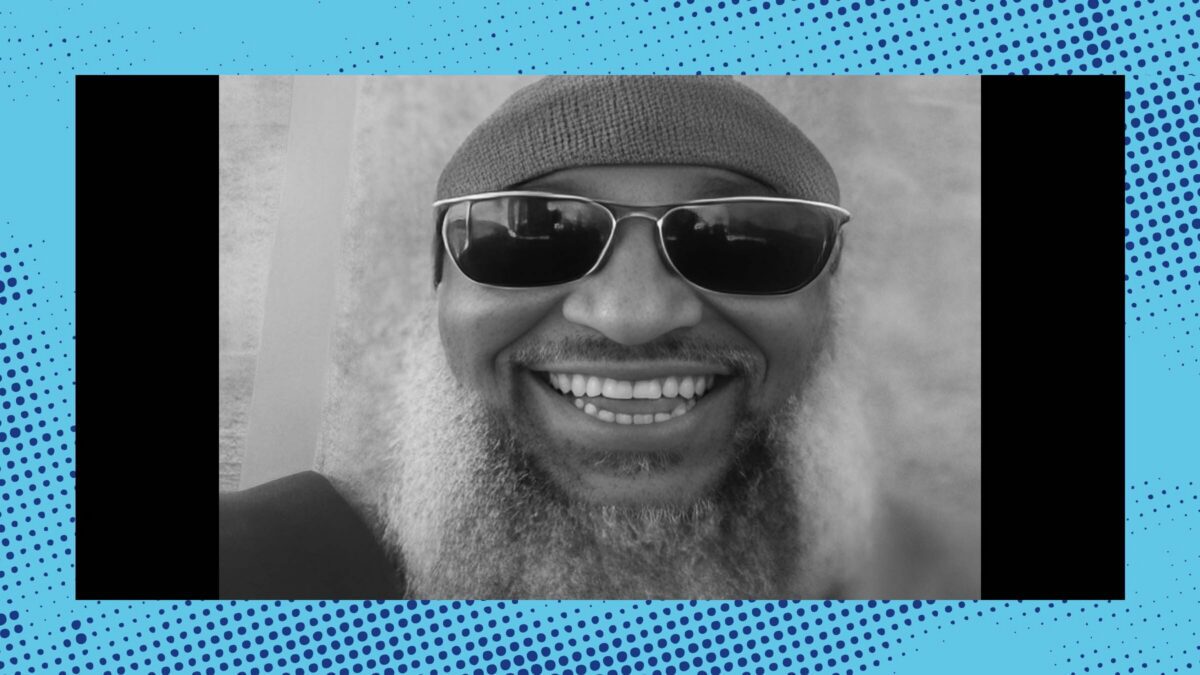
On May 21, Tennessee is scheduled to execute Tony Carruthers, who in 1996 was convicted and sentenced to death for the kidnapping and murder of 21-year-old Marcellos Anderson; Anderson’s mother, Delois; and Anderson’s friend, Frederick Tucker. The case made headlines at the time because of the horrifying nature of the deaths: The three bodies were discovered buried underneath a recently interred casket in a Memphis cemetery, and at Carruthers’s trial, the medical examiner stated that the victims had still been alive when they were buried. Prosecutors relied on this aggravating factor—that the murders were “especially heinous, atrocious or cruel”—when they sought the death penalty.
But the case against Carruthers was riddled with issues from the start. For one, no physical evidence ever linked him to the crime. The state relied on the dubious story of a jailhouse snitch to get a grand jury to indict Carruthers for the murders. And most egregiously, due largely to a schizoaffective disorder that plagued Carruthers for years, the trial judge rescinded his Sixth Amendment right to counsel, forcing Carruthers to represent himself at his own death penalty trial.
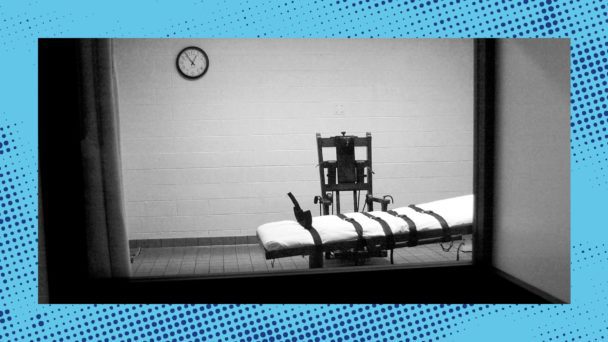
Carruthers’s self-representation was just the beginning of a long, shocking path through the criminal legal system. Absent executive clemency from Republican Governor Bill Lee or intervention from the U.S. Supreme Court, that path will end later this month with the execution of a man who is certainly mentally ill; whose conviction is tainted by serious deprivations of his constitutional rights; and who may be innocent of the murders that put him on death row in the first place.
From the time he was arrested, Carruthers exhibited paranoid delusions about his attorneys. He suspected multiple lawyers of conspiring with the prosecution against him, and believed that another was neglecting his case in an effort to start a homosexual relationship with him, and that still another was harboring a secret cocaine addiction. After Carruthers had been through six attorneys, the presiding judge, Joseph Dailey, grew tired of what he viewed as Carruthers’ attempts to delay the trial. Dailey ordered Carruthers to represent himself.
Carruthers pleaded for another lawyer. He apologized to his most recent attorney, who, once he realized Carruthers would have to defend his case alone, begged the judge to let him return. But Dailey proceeded, in part as a “sanction” for Carruthers’s “misconduct.”
Carruthers did not have the education, training, or competence to argue a criminal case, let alone one in which his own life was at stake. When his trial began, he was a 28-year-old with an extensive family history of schizophrenia, who had been in and out of detention and jail since he was 14 as he dealt with drug addiction and manic episodes. Throughout the trial, jurors expressed that they were both confused and offended by Carruthers’s erratic behavior: He obsessively repeated the same questions to witnesses, for example, and pulled at his groin while standing in front of the jury.
From the beginning, Carruthers stumbled through the substance of his defense. He called the prosecution’s jailhouse snitch to the stand, a man named Alfredo Shaw, whose testimony had plenty of problems: For one thing, Shaw told the grand jury that Carruthers had confessed to him when they were both in jail, even though the jail had orders to keep them in separate units after a previous disagreement. For another, Shaw described a three-way phone call with Carruthers and a set of twin brothers in which the three of them—Carruthers and the brothers—asked Shaw to take part in this murder. But Carruthers was in jail at the time of this supposed phone call, and contraband cell phones that would have enabled three-way calling did not exist at the time. The prosecution never charged the twins who Shaw claimed were planning the murder, and Shaw later told local news that the state had paid him for his testimony.
The prosecution branded Shaw a liar and decided not to have him testify at trial at all. But Carruthers believed that he could get the entire case thrown out if only he could prove that Shaw had lied. Thus, Carruthers decided to question Shaw in what Carruthers’s appellate attorneys have described as a “singularly inept, ineffective and disastrous” cross-examination that seemed “designed to secure not only a guilty verdict, but a death sentence.” Dailey, the judge, did not allow Carruthers to question Shaw on whether he had been a paid informant, and the prosecution threatened to arrest Shaw for perjury if he repeated his statements to the media. Thus, on the stand, Shaw simply reverted to his old story, which he recounted to the jury—but stripped of all the details that undermined it.
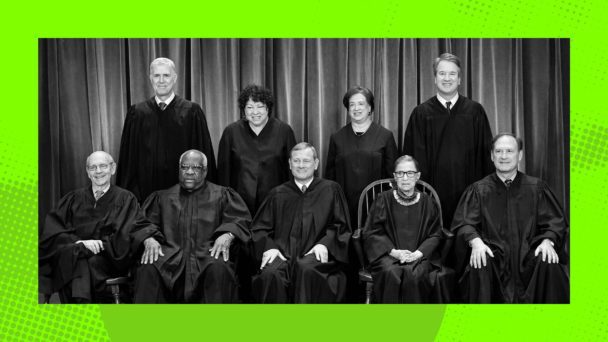
In April 1996, the jury found both Carruthers and his co-defendant, James Montgomery, guilty, and sentenced both men to death. But unlike Carruthers, Montgomery had a lawyer, and on appeal, Montgomery’s lawyers argued that Carruthers’s attempts at lawyering for himself were so prejudicial that Montgomery should receive a new trial. The Tennessee Supreme Court agreed, writing that Montgomery was “severely prejudiced” by Carruthers’s actions at trial, including “his offensive mannerisms before the jury, his questioning of witnesses that elicited incriminating evidence, and most importantly, his calling Alfredo Shaw to testify as a witness.”
Before Montgomery could get that new trial, though, the medical examiner who testified for the state recanted a key aspect of his earlier testimony, stating in an affidavit that he no longer believed the victims had been buried alive. In fact, another pathologist had reviewed the evidence before the original trial, at the judge’s request, and determined then that the victims had not been buried alive. He could have testified to this at trial, but Carruthers, acting as his own attorney, never called this pathologist to testify.
With their star witness recanting and the most shocking aspect of the murders dismantled, prosecutors decided not to retry James Montgomery at all. Instead, they offered him a plea deal of 27 years. Montgomery was released from prison in 2016.
Meanwhile, Carruthers faced an uphill battle appealing his conviction. In Tennessee, inmates on death row are automatically appointed attorneys to assist with their appeals. Though Carruthers, who refused to submit to mental health evaluations, suspected that these attorneys were also working with the prosecution, he did not fire them. These attorneys made repeated formal requests to the Shelby County District Attorney, the prosecutor’s office that had tried Carruthers, for information about whether Shaw had been a paid informant. Each time, the office—which has garnered national scrutiny for withholding evidence from defendants that could be helpful to proving their innocence—denied knowledge one way or the other.
Finally, in 2024, soon after Shelby County elected a reform-minded prosecutor, the Memphis Police Department shared Shaw’s file with Carruthers’s defense team. It detailed confidential agreements and payment records between Shaw and law enforcement that spanned decades, including during the time of Carruthers’s trial—evidence that Carruthers could have offered to undermine Shaw’s credibility.
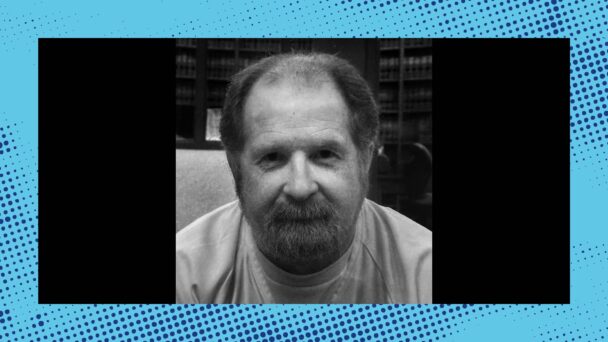
Between the revelations from Montgomery’s and Carruthers’s appeals processes, the key components of the state’s original case against Carruthers have collapsed. And in 2010, Montgomery stated that Carruthers wasn’t involved in the murders at all. Again, no physical evidence connected Carruthers to the crime, and according to Montgomery, it was another man, Ronnie Irving, who had committed the crimes with him. The ACLU has requested that unmatched DNA and fingerprints from the crime scene be compared to Irving’s, but to date, those motions have been denied on procedural grounds.
Since his conviction, Carruthers has maintained his innocence, and has repeatedly asked state and federal courts for a new trial. But every court has turned him down, in part because the further along in the appellate process a defendant is, the more difficult it is to introduce new evidence, no matter how consequential. Compounding the problem is the fact that one of the primary mechanisms that courts use to consider problems with death penalty convictions is ineffective assistance of counsel—a defendant’s claim that their trial counsel did not provide a constitutionally acceptable level of representation. The catch-22 Carruthers faces is that he has never been able to make that claim, because he was forced to represent himself.
Carruthers’s case demonstrates how deeply and dangerously the criminal legal system misunderstands serious mental illness. Today, Carruthers believes he is on death row because a grand conspiracy of judges, prosecutors, and his own defense attorneys put him there. Despite his upcoming execution, he continues to plan for his imminent release from prison, and has asked past attorneys to help him price the Jaguar car he will buy with the millions of dollars he believes he’s owed in damages. And he has spent decades covering his letters and legal filings with numerology and magical symbols, particularly the number 3.3, which is the section of the Tennessee Rules of Professional Conduct that requires attorneys to display candor to the court; the verse from the Book of Ezekiel about the prophet eating the word of God, via scroll, that tasted as sweet as honey; and the amount of money—$3.3 million—Carruthers maintains he will receive from judges and attorneys as a result of their conspiracy against him.
In 2007, the Supreme Court ruled in Panetti v. Quarterman that a defendant must have a rational understanding of why they are being executed in order to qualify as competent for their death sentence to be carried out. Yet Carruthers believes the state is about to execute him because of an elaborate, decades-long conspiracy that has no basis in reality. After visiting Carruthers in jail in May of 2005, one of his post-conviction attorneys wrote in a memorandum that it was “impossible” to “convey the sheer impossibility of penetrating Tony’s paranoia,” and has reiterated in recent affidavits that Carruthers’s beliefs are “not consistent with reality.”
If he is executed, Tony Carruthers will be the only person in the United States in more than a century to be put to death after being forced against their wishes to represent themselves at trial. Had the judge not denied him the right to counsel guaranteed by the Constitution, it is doubtful he would be facing execution at all.