In 2017, Americans legally wagered $4.9 billion on sporting events. Last year, they bet over $165 billion. And the true costs of their bets were even higher: One-quarter of sports bettors, surveyed by U.S. News last summer, worried that they couldn’t control their gambling. Over 30,000 people reach out to the National Problem Gambling Helpline every month.
“Problem gambling,” a term referring to an inability to control gambling behavior that results in personal or financial harm, is at least twice as common among sports bettors as among gamblers in general. It’s unsurprising, then, that Congress enacted a law decades ago that prohibited sports gambling throughout much of the country. But in 2018, the Supreme Court struck that law down, freeing states to partner with the gambling industry to profit off their vulnerable residents. A growing body of research shows Americans are now paying the price.
Before the Court’s decision in Murphy v. National Collegiate Athletic Association, only four states authorized some form of sports betting. One year after Murphy, 19 states and the District of Columbia authorized sports betting. Today, 39 states and Washington, D.C., have laws authorizing sports betting. Most allow people to place mobile bets, which means that millions of Americans now carry an addictive bankrupting device in their pockets.
The consequences have been predictably grim. A June 2026 study of patient records showed that in states that legalized sports betting, diagnoses of gambling disorder increased by more than 60 percent since the Court’s ruling. A March 2026 study found statistically significant increases in people falling 90 or more days behind on their car loan and student loan payments—both in states that legalized sports betting and in counties within 15 miles of a legal state. A February 2025 study of internet search queries found that searches for help with gambling addictions increased by 23 percent nationwide after the Court’s ruling. An October 2024 study found a 6 percent increase in intimate partner violence following upset sports losses in states that legalized sports betting after the Court’s ruling. Put simply, when the Supreme Court struck down Congress’s ban on sports betting, it created a public health crisis.
The Professional and Amateur Sports Protection Act of 1992 made it unlawful to operate state-authorized gambling schemes on sporting events. The handful of states that already operated sports betting systems were grandfathered in, but in general, no more states could get in on the act.
In 2011, though, New Jersey voters approved a constitutional amendment to permit sports betting at Atlantic City casinos and racetracks, hoping that gambling could propel the state out of an economic slump. New Jersey lawmakers were well aware that the state law directly violated PASPA, but argued that PASPA itself violated the Constitution.
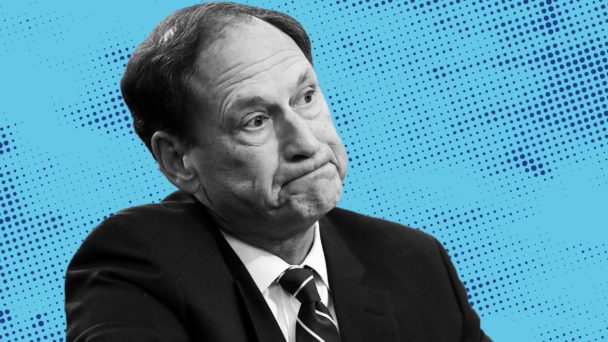
Although the Constitution expressly grants the federal government many powers, the Tenth Amendment provides that “powers not delegated” are “reserved to the States respectively, or to the people.” So, New Jersey argued, preventing states from legalizing sports betting was an improper intrusion on states’ legislative authority. In his opinion for the majority, Justice Samuel Alito agreed that the law ran afoul of the “anti-commandeering principle,” which is the idea that the federal government may not conscript states to enforce federal law. The provision of PASPA that prohibits states from authorizing sports gambling “unequivocally dictates what a state legislature may and may not do”—a “direct affront” to state sovereignty, he wrote.
Going further, Alito then decided to strike down PASPA’s provision barring private parties from operating or advertising state-sanctioned sports gambling programs, too. “These provisions were obviously meant to work together,” said Alito. “If Congress had known that the latter provisions would fall, we do not think it would have wanted the former to stand alone.” States had been preparing for this opportunity for years; within six weeks, for example, Illinois had legalized sports betting and started licensing sportsbooks to do business.
Congress passed the PASPA for a reason. In the wake of multiple high-profile sports betting scandals and growing concern about the impact legalized gambling would have on young people, lawmakers set out to stop the clear danger posed by sports gambling from spreading. In her dissent, Ginsburg wrote that there was “no rational ground” on which the Court could conclude that Congress would have preferred “no statute at all” to achieve these goals.
The gambling industry, however, did prefer it. And now, over one-quarter of Americans have an active online sports betting account, including more than half of men under the age of 50.