The American criminal legal system recently marked a grim milestone: On August 13, for the first time in more than 15 years, three people were put to death on the same day.
First, at 10:13 AM on Thursday, the Oklahoma Department of Corrections executed Carlos Cuesta-Rodriguez, a 70-year-old man who was convicted of killing his girlfriend in their home in 2003. The state parole board chairman told local media he was “somewhat inclined” to recommend clemency, but decided against it after Cuesta-Rodriguez said he didn’t deserve mercy.
Second, at 10:43 AM, the Tennessee Department of Corrections executed Anthony Darrell Hines, a 66-year-old man who was convicted of killing a housekeeper at a motel in 1985, and who had maintained his innocence for decades. Finally, at 6:16 PM, Alabama executed Jeremy Williams, a 42-year-old man who was convicted of raping and killing a 5-year-old girl in 2021.
Last week’s executions are part of a strange surge. From 2015 to 2024, there were fewer than 30 executions nationwide each year. Last year, there were 47, and so far in 2026, there have been 22. Put differently, the number of people put to death as of August 2026 has already matched or surpassed the year-end total of executions in five of the last ten years.
What makes this spike so peculiar is that public approval of the death penalty is at a modern low. A majority of American adults under the age of 45 oppose capital punishment, and have pushed support for the death penalty for people convicted of murder down to 52 percent. This is the lowest approval rate since 1972, which is, perhaps coincidentally, the same year the Supreme Court in Furman v. Georgia briefly held the death penalty unconstitutional.
The amount of death sentences imposed by courts across the country has also been declining for decades. In the 1980s and 1990s, American juries routinely sentenced hundreds of people to death per year. After peaking at 325 new sentences in 1986, the number of death sentences steadily declined. In 2025, only 23 people were sentenced to death. A mid-year report by the Death Penalty Information Center shows that in the first six months of 2026, capital juries chose to impose a life sentence rather than a death sentence at least 19 times, compared to just 12 death sentences. Put differently, the jurors in death penalty-eligible cases chose not to have people killed more often than not.
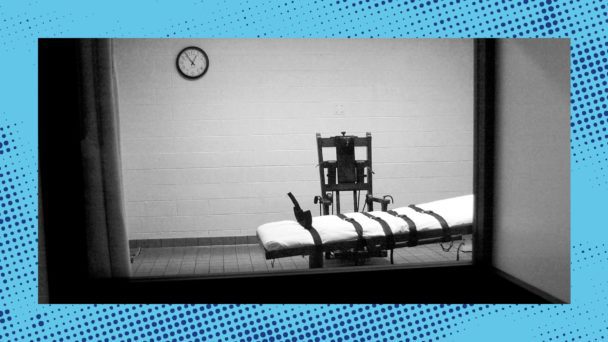
A review of Americans’ stance on the death penalty as conveyed in polling data and jury verdicts reveals a massive disconnect between public preferences and public policy. And it shows how the legal system empowers Republican politicians and conservative judges to exert outsized influence.
The single biggest contributing factor to the growing rate of the death penalty is the Republican takeover of Florida. Of the 47 executions carried out across the country last year, Florida conducted 19, making the state responsible for 40 percent of all executions in 2025. Of the 22 executions so far this year, 13 were in Florida. And of the 12 new death sentences handed down between January and July 2026, four were imposed by nonunanimous juries in Florida.
Back in 2016, the Florida Supreme Court held that nonunanimous death sentences were unconstitutional. But in 2019, Ron DeSantis, a Republican, became governor and quickly packed the court with far-right reactionaries. The refashioned court has since recast its 2016 decision as erroneous and upheld a law that requires only 8 of 12 jurors to sentence someone to death.
Florida law also gives the governor an unusual amount of discretion over how the death penalty is exercised. When a person in Florida is sentenced to death and exhausts their appeals, they become “death warrant eligible,” and then the governor decides whether and when to sign their death warrant. For his first several years in office, DeSantis did so sparingly, but since President Donald Trump returned to the White House in January 2025 and championed the death penalty, DeSantis has scheduled an execution roughly every two weeks.
Republican capture of the U.S. Supreme Court has also contributed to the recent growth of the death penalty. While the Court has long been reluctant to grant requests from people on death row seeking to temporarily halt their executions, it has become even more so under the current conservative supermajority. Among the 47 people who were executed in 2025, 34 of them filed emergency stay requests. The Supreme Court denied every single one.
Simultaneously, the Court has become much more likely to grant requests from states seeking to immediately proceed with an execution. From 2011 to 2017, for instance, the Court granted 40 percent of state requests to lift a lower court order that prevented it from carrying out an execution. Since Justice Brett Kavanaugh joined the Court in October 2018, it has granted 89 percent of such requests.
As executions increase, it is important to recognize that the death penalty is anathema in most of the country. Twenty-three states have formally abolished the death penalty, including 11 states that have done so during the past 20 years. And even in states that have laws on the books permitting capital punishment, 10 of those states haven’t carried out an execution in at least a decade, and an additional four states haven’t had an execution in five or more years. Taken together, 37 of 50 states have functionally abandoned the death penalty.
The fact that more people are being put to death anyway evinces a democratic breakdown, and a legal system that permits the cruelty of a few to dominate over the decency of the many.