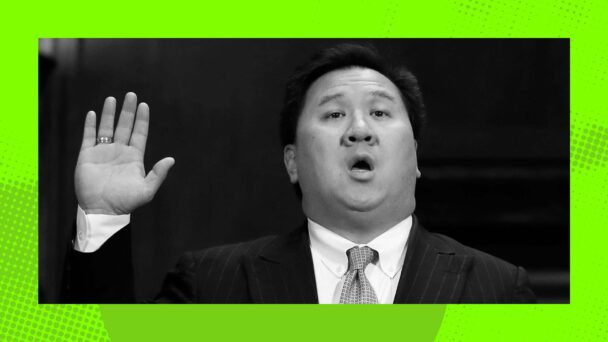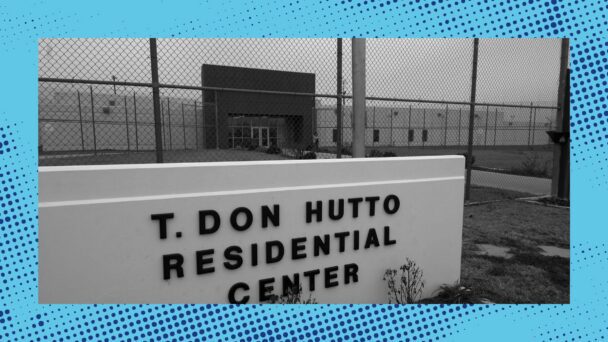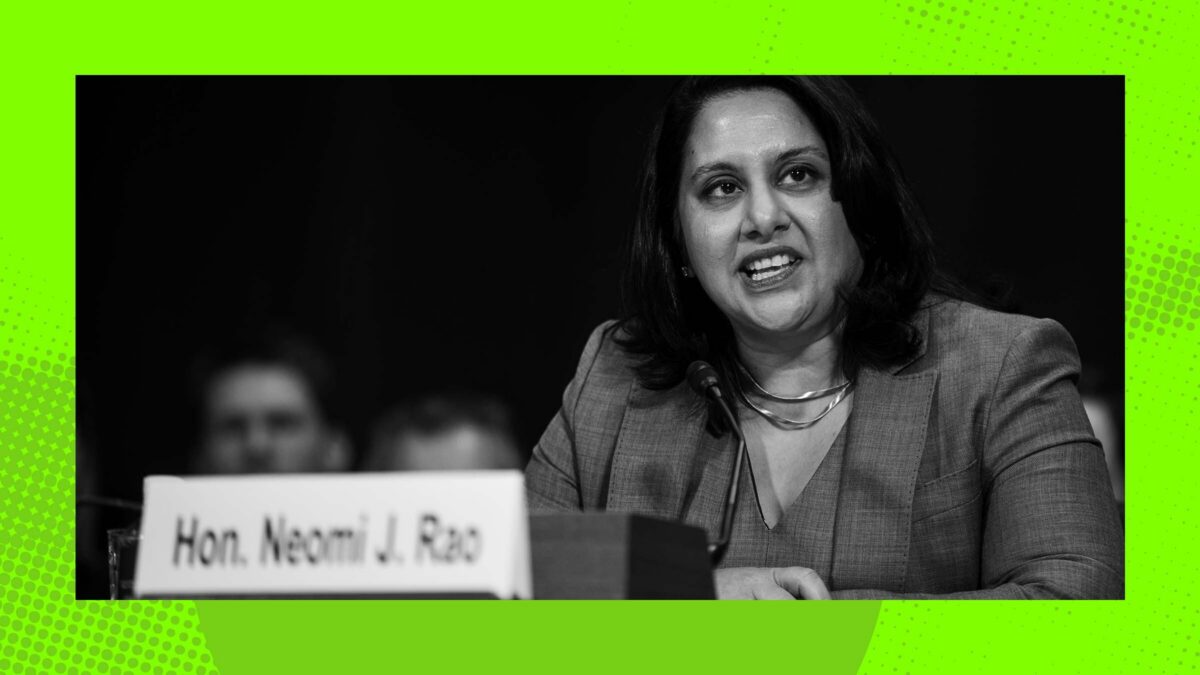
For a full year, U.S. District Judge James Boasberg has been trying to hold the Trump administration accountable for violating a court order that prohibited the government from arbitrarily sending immigration detainees to be imprisoned in El Salvador. Trump-appointed judges on the D.C. Circuit Court of Appeals have spent that year preventing him from doing so. On Tuesday, the D.C. Circuit issued its fourth order halting Boasberg’s contempt inquiry, which Judge Neomi Rao, a first-term Trump appointee, characterized in her majority opinion as “improper,” “unnecessary,” and “a clear abuse of discretion.”
The D.C. Circuit’s latest order directs Boasberg to “terminate” his criminal contempt proceedings. But the contempt inquiry is not likely to end here. Rao, a rumored candidate on Trump’s Supreme Court shortlist, was writing for a divided three-judge panel and joined by fellow Trump appointee Justin Walker. The attorneys for the wrongfully removed people plan to petition the full D.C. Circuit to review the panel’s decision. And six of the court’s 11 judges are already on record saying that Boasberg properly exercised his contempt authority, and that an earlier panel was wrong to cut off the district court’s investigative process.
It is worth remembering exactly what conduct Trump judges on the D.C. Circuit are trying to shield from judicial scrutiny. On March 14, 2025, President Donald Trump signed a proclamation invoking the Alien Enemies Act of 1798, a little-used statute that allows the government to detain and remove citizens of a “hostile nation or government” if there is “a declared war” between that government and the United States, or if that government is perpetrating an “invasion or predatory incursion” on American territory.
The proclamation, which became public the following day, claimed that the transnational gang Tren de Aragua was perpetrating such an “invasion” and “conducting irregular warfare” against the United States on behalf of “the Maduro regime in Venezuela.” It further ordered the immediate detention and removal of any Venezuelan aged 14 and up who the administration alleged was a gang member. It didn’t say where they would be removed to.
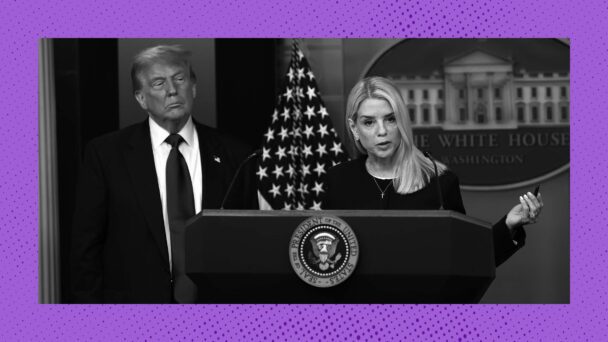
The ACLU filed an emergency lawsuit before the proclamation was even online, and told Boasberg they had reason to believe the administration was already putting people on planes—preparing to send them to a foreign prison known for torture and other human rights abuses without so much as an opportunity to prove their innocence.
Boasberg scheduled a hearing for 5 PM and asked the government’s lawyer point-blank whether there were imminent removals planned under the proclamation. The Justice Department lawyer claimed he didn’t know, so at 5:22 PM, Boasberg adjourned the hearing until 6 PM to allow him to investigate. A removal flight took off at 5:25, followed by another at 5:45.
When the hearing resumed at 6 PM, the Justice Department lawyer told Boasberg he still had no flight details to share. Boasberg ordered the government not to carry out any removals under the proclamation for 14 days, and said that if planes had already taken off, the people needed to be returned to the United States.
Several hours later, the government transferred the migrants into El Salvador’s custody. Secretary of State Marco Rubio then retweeted a post from the president of El Salvador: a news headline about Boasberg’s order, accompanied by the text, “Oopsie…Too late 😂😂.”
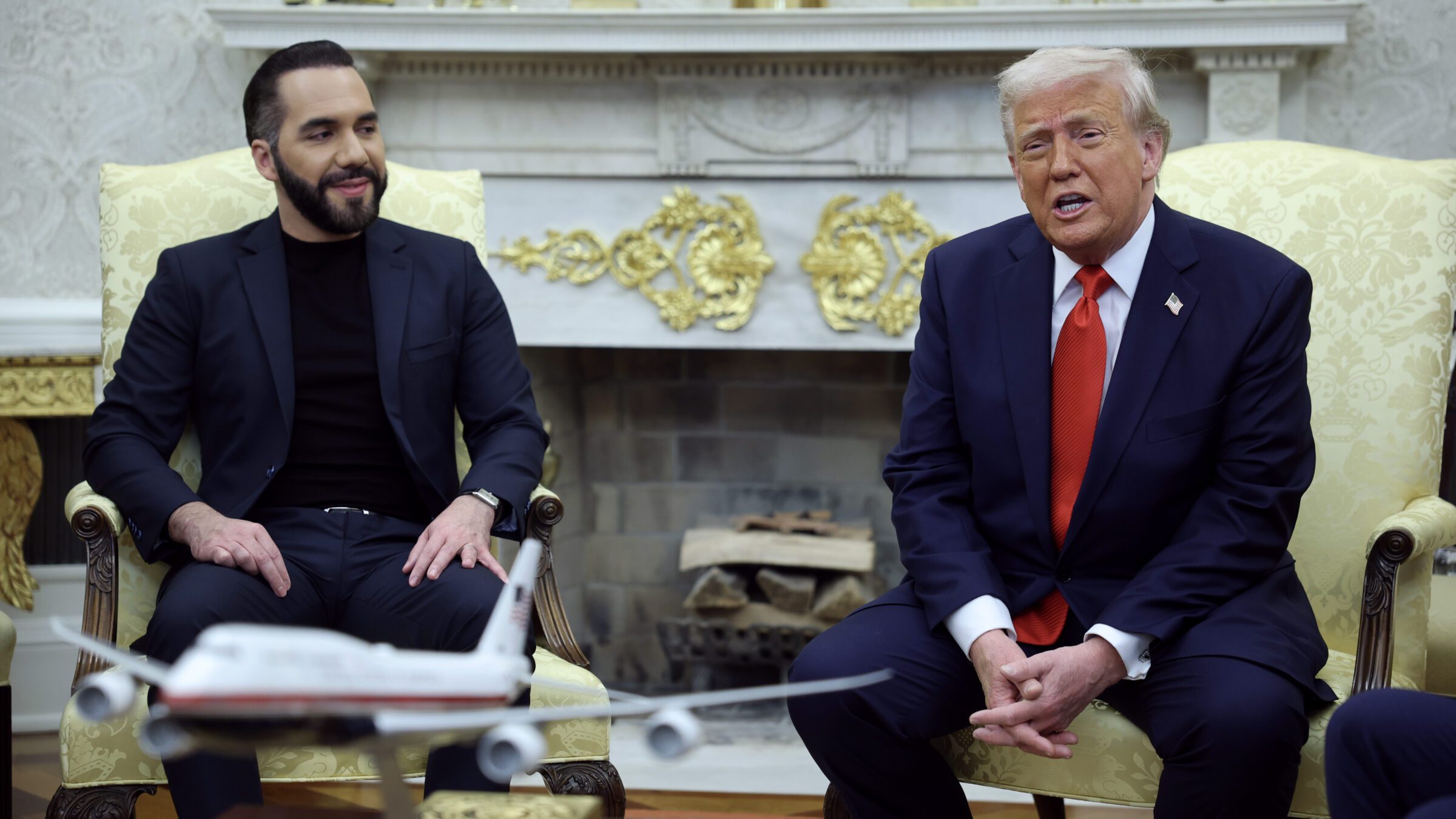
(Photo by Win McNamee/Getty Images)
On April 16, 2025—a year ago, today—Boasberg found probable cause to hold the government in criminal contempt. It is not complicated to understand why. Judges have the authority to hold parties in criminal contempt if they willfully violate a court order. And here, after trying and failing to avoid the court’s review, the Trump administration simply ignored the court’s order, all the while laughing about the lives it endangered in the process.
Yet in her opinion on Tuesday, Rao contended that the Trump administration had a “clear and indisputable right to termination of this judicial investigation” because the order it violated was “insufficiently clear and specific to sustain a charge of criminal contempt.” According to Rao, Boasberg only prohibited the “removal” of the migrants, and “said nothing about transferring custody” of them. Because the planes were in the air already, she said, the “removal” already occurred, and the DOJ’s decision to hand over the migrants to a Salvadoran megaprison cannot support a contempt investigation.
Decades of D.C. Circuit precedent confirms that the clarity of a judicial order, for contempt purposes, depends on its context, including “the objective circumstances surrounding the issuance of the order” and “the mischief that the injunction seeks to prevent.” In other words, judges assessing a party’s compliance with a court order should act like they have some goddamn sense. Rao did not. The harm the order aimed to prevent was not merely transporting migrants out of American airspace, but discharging them into dangerous conditions in a foreign country in violation of their rights as American residents.
Rao’s analysis is especially egregious because she had no business making this assessment in the first place. Appeals courts are supposed to review final decisions, and all Boasberg did was begin an investigative process. It is one thing to say a judge abused their discretion by convicting someone of contempt. It is entirely another to say a judge abused their discretion by trying to find out whether a contempt trial is warranted. Rao nonetheless criticized the inquiry as an “unwarranted judicial intrusion into Executive Branch decisionmaking regarding matters of national security,” and chastised the district court as “antagonistic.”
Rao’s opinion is essentially a Truth Social post with a thesaurus. Trump regularly claims to have vast latitude as president to treat the presence of people of color in the country as a national security issue, so Rao says as much, too. Trump regularly claims that rogue district court judges treat him unfairly, so Rao says as much, too.
Trump’s lawlessness caused dozens of people to be tortured. And rather than permit Boasberg to respond to the violation of legal and human rights, Rao depicts him as some guy with a vendetta. But as Judge Michelle Childs made clear in her dissent, “contempt of court is not addressed for the district court’s vanity.” Rather, “it is done to preserve and enforce our law.”
That, however, is not what Trump put Rao on the court to do. By pursuing consequences for the federal government’s flagrant violation of law, Boasberg is doing the job of a judge. By crafting stilted, absurd analysis to let Trump violate the law with impunity, Rao is doing the job of a Trump judge.