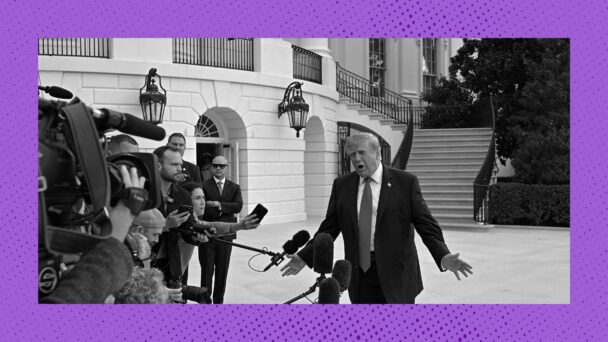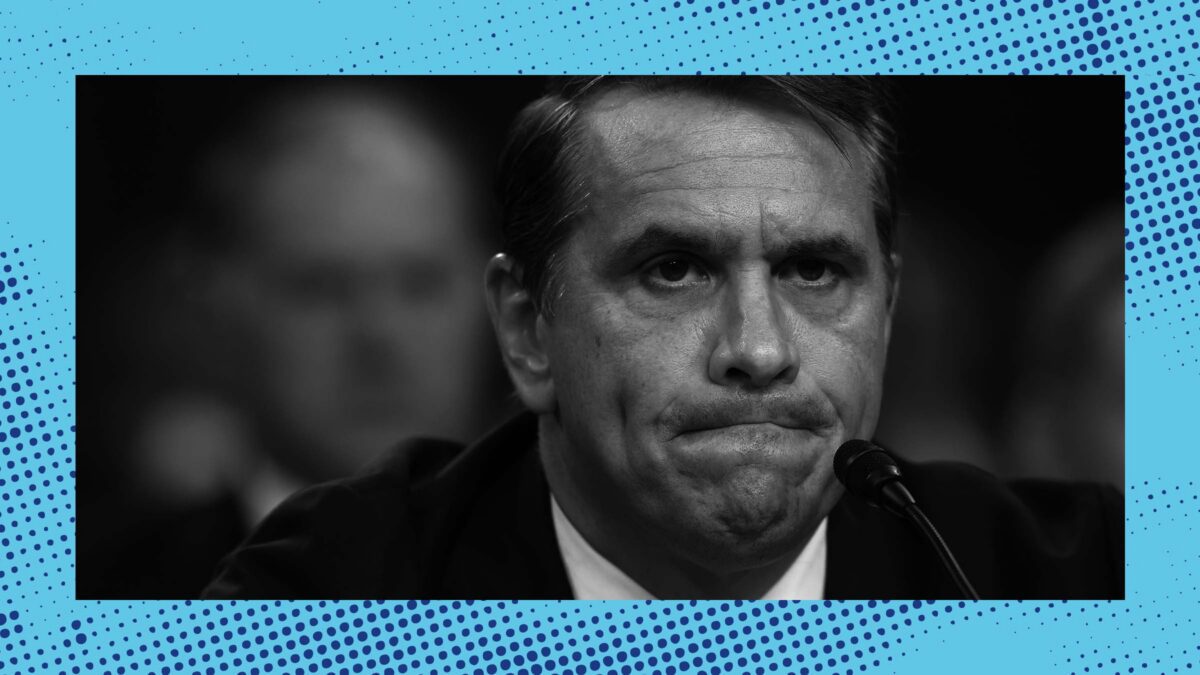
Attorney General Todd Blanche doubled down on the Trump administration’s peculiar interpretation of the First Amendment over the weekend. During an appearance on ABC’s This Week, Blanche argued that Trump may legally ban news outlets he considers “one-sided” from the White House and Air Force One because being there is “a privilege and not a right.”
As a reminder, the very first provision of the Bill of Rights prohibits the government from “abridging the freedom of speech, or of the press.” But Blanche’s comment was not an on-air slip of the tongue. It’s the official and oft-repeated line of Trump’s Justice Department, which throughout his second term—when fighting with the press, when fighting law firms, and when pulling federal funding that benefits people he doesn’t like—has argued that the government may single people out for worse treatment because of their viewpoints, and that the First Amendment doesn’t say anything about it.
Blanche’s comments were about Trump’s decision on September 18 to ban journalists at CNN, MS NOW, and Politico from the White House grounds. A few days later, the journalists sued the Trump administration in Washington, D.C.’s federal district court, aiming to vindicate their First Amendment rights as well as their Fifth Amendment right to due process.
In response, the DOJ contended that the journalists’ First Amendment claims should fail because “access to the White House is a privilege—not a right.” Going further, it also argued that “the Government may control reporters’ access to restricted presidential areas, such as the Oval Office, even for viewpoint-discriminatory reasons.”
Federal district court judge Timothy Kelly, a Trump appointee, was not persuaded by the administration’s arguments, and issued a temporary restraining order directing the Trump administration to restore the journalists’ press credentials. But the court’s analysis was limited to the due process claim. This means that the judge has not yet expressly rejected the administration’s reimagining of what people are free to do—and what the government is prohibited from doing—under the First Amendment.
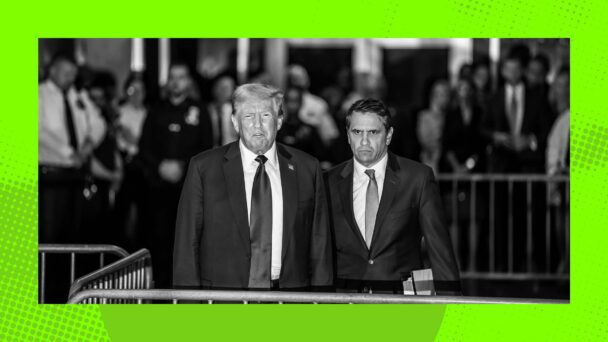
The White House press ban lawsuit is not the first time that Trump’s DOJ has claimed that presidents have the authority to block journalists from the White House because of their constitutionally protected speech. In February 2025, for example, the White House banned the Associated Press from the White House press pool because it continued to refer to the Gulf of Mexico by its name, rather than adopt Trump’s preferred nomenclature. “We’re going to keep them out until such time as they agree that it’s the Gulf of America,” said Trump.
The AP filed a lawsuit challenging the government’s attempt to control its speech. In its March 2025 filings, the DOJ argued that presidents may legally exercise their “discretion” to “grant access to different media organizations based on the content of their coverage.” Again, a federal district court judge was not convinced, and held that the government cannot open its doors to some journalists but “shut those doors to other journalists because of their viewpoints.”
Trump’s Justice Department also sought to downgrade the status of the First Amendment in March 2025, after Trump published an executive order alleging that the law firm Perkins Coie had engaged in “dishonest and dangerous activity” by representing clients who sued the Trump administration, as well as Hillary Clinton’s 2016 presidential campaign. The order directed government agencies to strip Perkins Coie employees of their security clearances, to ban them from federal buildings, and to terminate government contracts with clients of the firm.
Perkins Coie sued, arguing that the order violated a host of laws, including the First Amendment. But at oral argument in March 2025, DOJ lawyer Chad Mizzelle cautioned against “throwing around” terms like “viewpoint discrimination” in the “national security context,” because, he said, the government is “not required to trust our nation’s secrets to somebody who advocates for the overthrow of the federal government or for someone who is engaged in other sort of dangerous actions that are contrary to the national security of the United States.” The administration failed to convince the district court judge in this case, too, and the government’s appeal is pending before the D.C. Circuit.
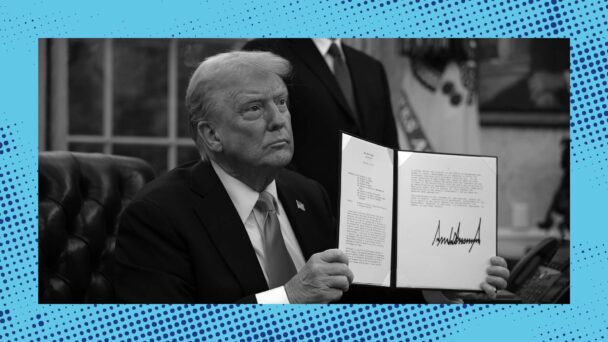
The Justice Department’s assault on First Amendment principles has also come up in the context of cuts to federal funding. Upon reentering the White House in January 2025, Trump issued a slew of executive orders declaring that sex is “not changeable” and forbidding government agencies from “promoting diversity” and “gender ideology.” He also conditioned access to federal funds on potential grant recipients’ willingness to do the same.
Several nonprofits that provide healthcare to LGBTQ people filed a lawsuit challenging the orders. But in its opposition brief, the DOJ downplayed the restrictions as legitimate “policy priorities,” and claimed that the government “does not violate the First Amendment by not affirmatively funding programs that do not align with those policies.” The administration lost at the district court here, too, and its appeal is pending before the Ninth Circuit.
The DOJ acknowledged in its brief the constitutional requirement that government programs that generally make funding available to everyone must do so on a viewpoint-neutral basis. But just as quickly, it argued that that same requirement doesn’t apply to competitive programs. “When the government decides to selectively fund a program,” the brief argued, “it may choose grants that advance its policy goals and reject grants that do not.”
Time and again, the Trump administration has shown that it believes your First Amendment rights don’t really exist. And the DOJ’s arguments reflect the administration’s view of the Constitution writ large: Where regular Americans see “rights,” the Trump administration sees mere privileges to be granted or withheld at Trump’s leisure.