The First Amendment is a blunt tool. Crafted by the Supreme Court intentionally to overprotect, the law of free speech does so by erring on the side of a sort of formalistic inanity. Federal judges adjudicating First Amendment claims must studiously ignore relevant context and common sense, and instead apply all the creativity, flexibility, and appreciation for nuance of a Roomba.
Factor in the Court’s ability to choose its own cases, though, and you can start to see how the First Amendment has evolved into such a potent political weapon. Once the Court has picked cases in which formal application of First Amendment doctrine serves its interest, that formalism also serves as a convenient shield from criticism, allowing the conservative justices to stave off accusations that its decisions are politically motivated.
But the best part for the Court is that its key move in these cases is often uncontested—frequently even unexamined. The Court’s whole First Amendment deal only works if, well, it’s a First Amendment case. That’s where they get you. You emerge from a fugue state to find yourself analyzing if, for example, a law prohibiting pharmaceutical companies from buying data on what drugs individual doctors are prescribing is “content-based,” and thus presumptively unconstitutional. Wait, what? How did I get here? What does this have to do with free speech? Too late! John Roberts is already dunking on the other end of the floor.
The potency and abstraction of First Amendment doctrine are, to be clear, very defensible. But they make it all the more important that judges appropriately police the boundaries of the First Amendment’s applicability, lest the Amendment run roughshod over democratic government. Lately, the Court’s aggressive use of the First Amendment as a deregulatory tool has thrown that balance out of whack.
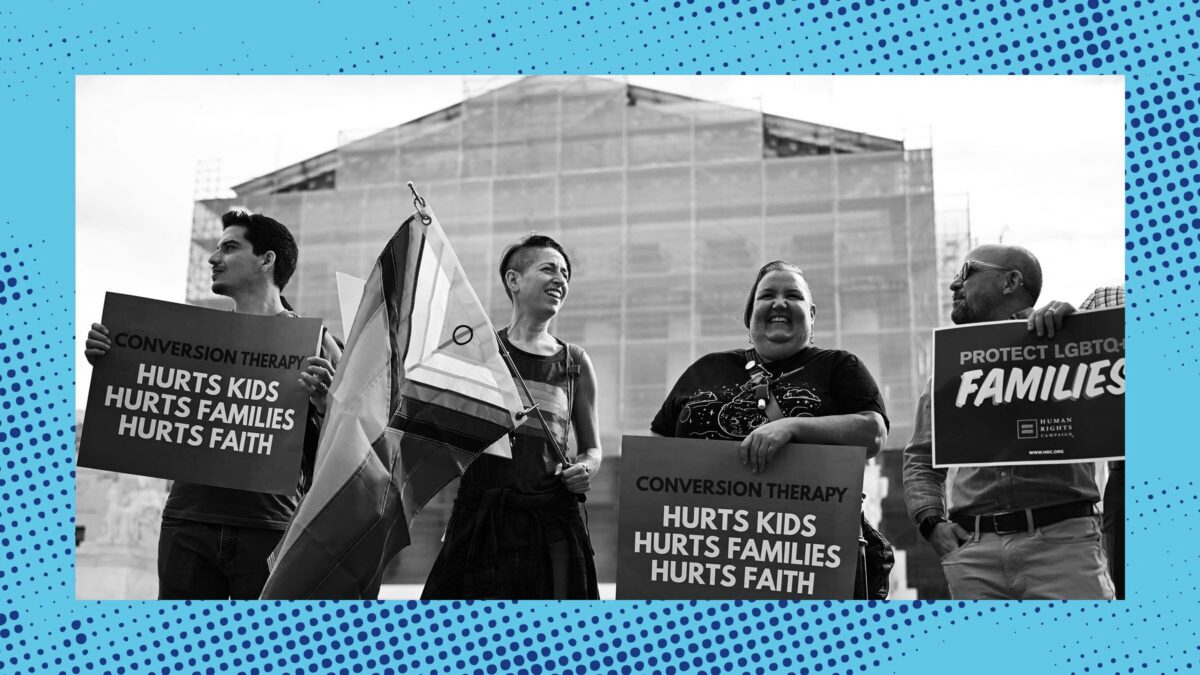
Look no further than last month’s decision in Chiles v. Salazar, in which the Court held that a Colorado law banning so-called “conversion therapy” for minors, when applied to the clinical practice of “talk therapy,” was a content- and viewpoint-based regulation of speech, and therefore subject to strict scrutiny. (As a technical matter, that shouldn’t necessarily doom the law, but the Court left no doubt as to how it expected the lower courts to resolve the case.) It held so despite extensive evidence that exposure to conversion therapy nearly doubles the chance that an LGBTQ+ child will attempt suicide—evidence that has led the practice to be roundly discredited by the major medical and psychological organizations and prohibited by more than 25 states. Justice Ketanji Brown Jackson was the sole dissenter, but even she agreed with the Court’s holding that talk therapy is constitutionally protected speech; she just would have judged the law by a more forgiving standard.
That conclusion is wrong. And it has the potential to be disastrous.
Let’s start with the basics: “Speech”—the thing protected by the First Amendment—means simultaneously more and less than its literal definition; not all intelligible mouth sounds are speech, and speech includes more than just intelligible mouth sounds. This is because, to quote Justice Neil Gorsuch’s opinion in Chiles, “the First Amendment is no word game.” Put another way: We protect speech not because we like hearing intelligible mouth sounds, but because protecting speech serves more fundamental purposes, like democratic self-governance, human autonomy, and the quest for truth and knowledge.
For a long time, this purposivism was the conventional explanation for why the Constitution doesn’t protect fraud, defamation, true threats, incitement, and the like—all intelligible mouth sounds, none speech. But in a 2010 decision, the Supreme Court invented a new explanation: that the government’s ability to proscribe these categories of mouth sounds comes not from their low value, in terms of those fundamental interests, but from the fact that they have been “historically unprotected.”
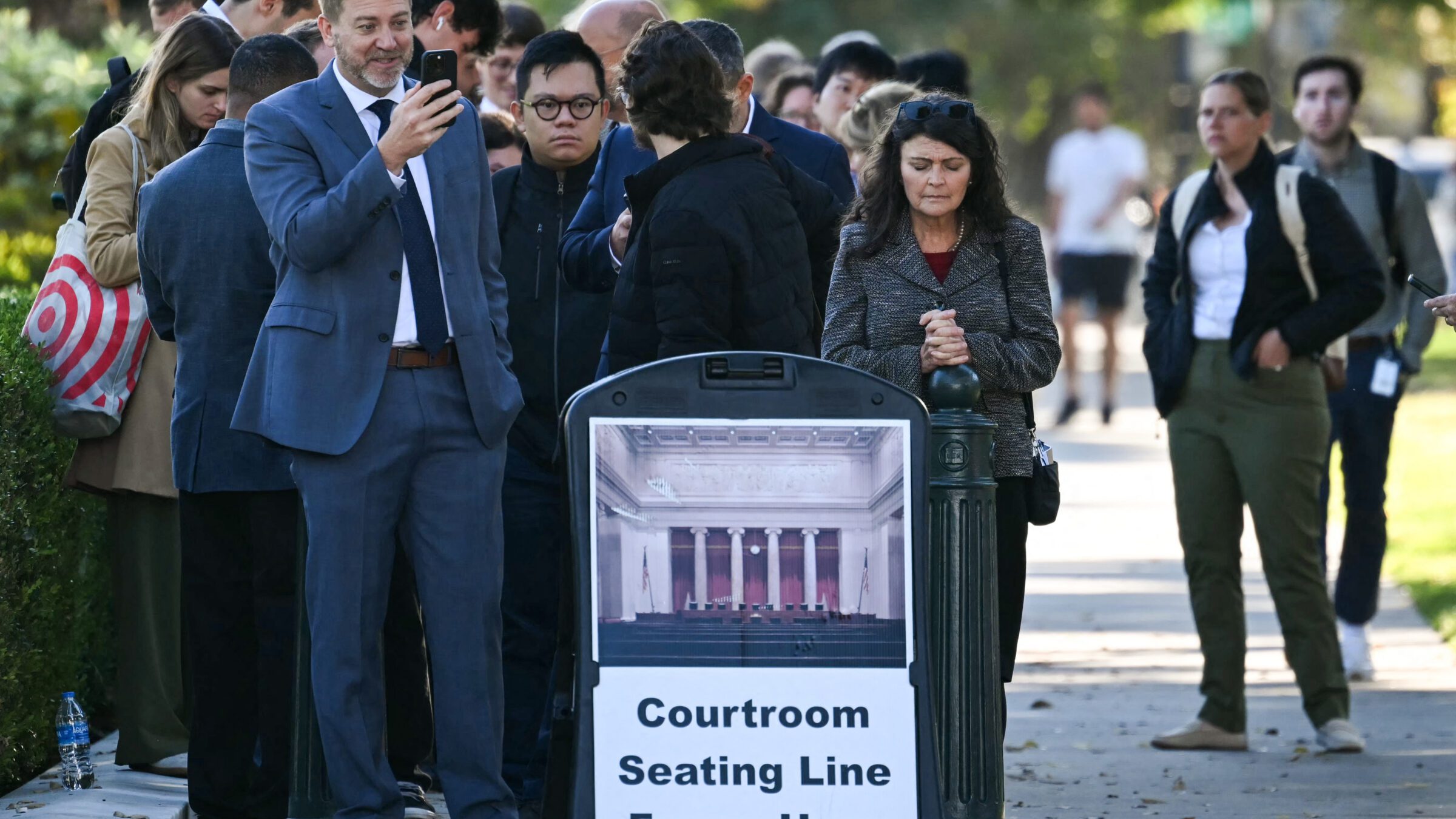
People wait in line to enter the Supreme Court to attend oral arguments in Chiles v. Salazar, October 2025 (Photo by ANDREW CABALLERO-REYNOLDS/AFP via Getty Images)
A few years later, the Court declined to find that “professional speech”—the mouth sounds that heavily regulated professions like doctors and lawyers make in the course of providing their services—was one such category of “historically unprotected” speech. So, if the government wants to regulate what doctors tell patients, it has to satisfy the same nearly impossible burden that it would if it were regulating what a newspaper can publish or a novelist can write. Like I said: a blunt tool.
Each of these decisions rested on dubious historical footing. As to the first, essentially all speech could be reasonably described as “historically unprotected” relative to the modern baseline. For much of American history, all “freedom of speech” meant was that you couldn’t be censored ahead of time, but after-the-fact civil or criminal liability was mostly considered unobjectionable. As to the second, professional speech historically has been subject to regulation without any thought towards the First Amendment—for example, via malpractice liability.
No matter. Over the past two decades, the Court’s conservative majority has aggressively pushed this kind of originalist reasoning as an overarching methodological requirement in constitutional law. (This project has wreaked havoc on Second Amendment law in particular, with lower courts in all but open revolt and the constitutionality of modern gun laws apparently turning on how frequently Thomas Jefferson got drunk.) Originalism’s expansion has broken something fundamental in First Amendment law, primarily because the Court has applied it in only one direction: what constitutes “speech” is defined through an expansive, wholly modern understanding, but the exceptions to the right’s coverage are limited to those that already have a longstanding historical tradition. As such, the boundaries of the right can only grow. Which means that the scope of democratic authority can only shrink.

Consider how this shook out in Chiles. The Court held that Colorado’s law does not fall into a “historically grounded practice” because states did not begin regulating therapy until 1976. The reason for that is obvious: Psychotherapy as a clinical discipline barely existed prior to Freud’s Studies on Hysteria in 1895, and developed over the first half of the twentieth century. It only achieved anything nearing analytical coherence and professional structure in the 1970s, in part due to changes in federal funding that sought to transition mental-health treatment away from the horrific institutionalization of earlier years in favor of community-centered and outpatient approaches. There is no longstanding tradition of regulating talk therapy because talk therapy did not meaningfully exist until relatively recently.
This is a prime example of why the one-way originalist ratchet is so problematic. By constitutionalizing James Madison’s ignorance of neuropsychology—his founding-era contemporary, Dr. Benjamin Rush, treated depression through bloodletting, mercury, and something called the “Tranquilizing Chair”— the Court has taken a swath of policy choices off the table for the American people, regardless of necessity or wisdom, forever. The only available solution—literally—is to get 34 states together to amend the Constitution to add “…except therapy” to the end of the First Amendment. And to do it again every time the Court incorrectly expands the scope of the First Amendment.
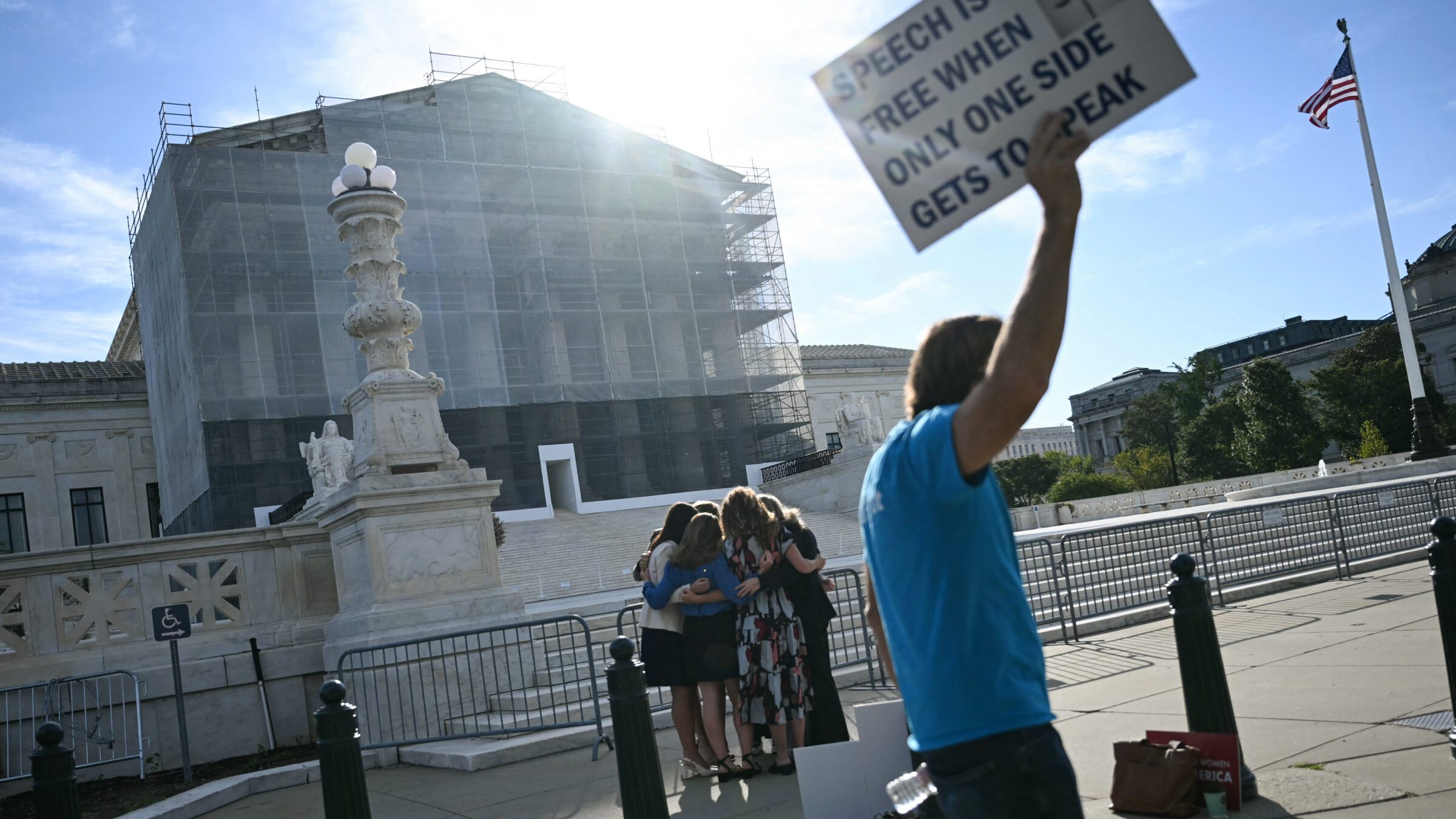
(Photo by ANDREW CABALLERO-REYNOLDS/AFP via Getty Images)
I don’t know if the founding generation would have thought that talk therapy is protected by the First Amendment. I also don’t particularly care. The purpose of the First Amendment is to protect the expression of ideas. The purpose of therapy is to identify and ameliorate neuropsychological problems in the patient—to provide a medical treatment, not to express the therapist’s ideas. That talk therapists do this through intelligible mouth sounds does not make their treatment speech.
The Court’s conclusion otherwise is barely reasoned. Gorsuch relies entirely on the observation that “all Ms. Chiles does is speak with clients,” asserting that her “speech does not become conduct just because the State may call it that.” But the Court, not Colorado, is the one relying on labels. Talk therapy is speech, the Court says, because the therapist is making intelligible mouth sounds. That is Gorsuch’s “word game,” not too different from suggesting that the things connecting my shoulders to my hands are mentioned in the Second Amendment.
The error in treating therapy as speech becomes even more apparent in Justice Elena Kagan’s concurrence, in which she accuses Colorado of “skewing the marketplace of ideas” by “suppress[ing] one side of [the] debate” over conversion therapy. But Chiles remains free to hand out leaflets, testify before the legislature, corner people at dinner parties, and otherwise debate conversion therapy to her heart’s content. She just can’t provide prohibited medical treatment. Colorado’s prohibition on her doing so via talk therapy is no more a suppression of the broader debate than its prohibition on her doing so via electric shocks or induced nausea.

The problem here is more than just theoretical. If something constitutes speech, any content-based regulation is presumptively unconstitutional. The breadth of the Court’s reasoning in Chiles, therefore, threatens a host of previously uncontroversial laws regulating speech in the medical profession, as Jackson explains in dissent. The majority does not—because it cannot—deny this point.
But Jackson is, if anything, too optimistic. If therapy is speech, as the Court holds, then licensure itself is a content-based regulation, because it distinguishes the words you need a license to say from other speech. After Chiles, it’s not clear how state laws requiring someone to have a license to “just talk” will survive.
Chiles will also have ramifications beyond medicine. Most of what lawyers do is speech under the Court’s reasoning, and lawyers are subject to all kinds of content-based regulations on their work, both in the form of specific prohibitions (e.g., no revealing client confidences) and after-the-fact malpractice liability for bad advice. Assuming the Court doesn’t make up an arbitrary reason not to extend its reasoning, any content-based regulation of lawyer speech should now be understood as presumptively unconstitutional.
I’d much rather have an overprotective First Amendment than an underprotective one. But respect for democracy—and the need for policy flexibility to address new problems as they arise—requires more care than the Court has shown in its recent cases. Chiles shows what happens when the Court’s conservative majority wields a First Amendment hammer: It finds nails.