Barely halfway through oral argument in Trump v. Barbara, the Supreme Court case about President Donald Trump’s attempt to revoke the Fourteenth Amendment’s guarantee of birthright citizenship, it already felt like Trump was losing in a blowout. In a representative exchange, Justice Amy Coney Barrett asked Solicitor General John Sauer about the implications of Trump’s executive order for the legal rights of “foundlings,” an antiquated term for young children of unknown parentage who are physically present in the United States.
Sauer began by citing a provision of federal immigration law, but before he could go any further, Barrett cut him off. “Yeah, yeah, yeah, yeah,” she said. “But what about the Constitution?” Generally speaking, if you are a conservative lawyer arguing a case before the Supreme Court in 2026, Amy Coney Barrett asking you a question like “But what about the Constitution?” is a pretty good sign that you are, to use a technical term, cooked.
Barrett was one of several justices on Wednesday who sounded mildly annoyed that Trump was even asking the Court to revisit a question it answered during the administration of President William McKinley. Justice Elena Kagan described Sauer’s argument as resting on a “revisionist” legal theory, while Justice Neil Gorsuch lightly mocked his reliance on, of all things, principles of “Roman law.” When Sauer quoted a Reconstruction-era lawmaker who tried to persuade his colleagues not to provide for birthright citizenship in the Fourteenth Amendment, Justice Sonia Sotomayor interrupted with a cutting reminder. “He failed,” she said.
Probably the most memorable line, which the legal commentariat’s most credulous rubes will be praising incessantly for the foreseeable future, came from Chief Justice John Roberts, after Sauer warned that the United States had entered a “new world” since the end of the Civil War, in which “8 billion people are one plane ride away from having a child who is a U.S. citizen.” Roberts, in the solemn tone of a man who’d spent weeks rehearsing his delivery in front of the mirror, was ready with a retort. “It’s a new world,” he told Sauer. “It’s the same Constitution.”
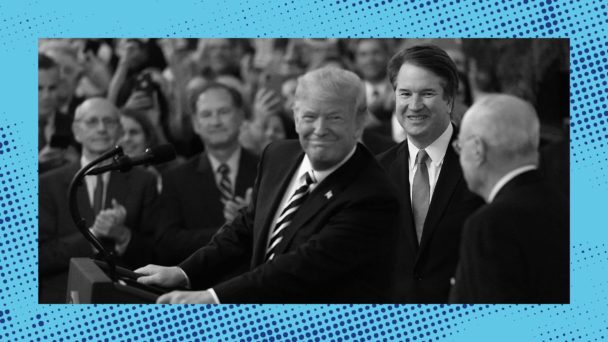
On Tuesday night, the White House had announced that Trump would attend oral argument in person, which immediately struck me as reeking of desperation—the sort of stunt you might pull if you sensed you were losing, and were already planning to rehash your usual complaints about very unfair treatment. Sure enough, journalists in the room reported that Trump departed shortly after Sauer’s allotted time for questions was over. It is possible that he left early because he was bored, hungry, or some combination thereof; it is also possible that he did so because, by that point, he and everyone else in the room understood that he was getting his ass beat.
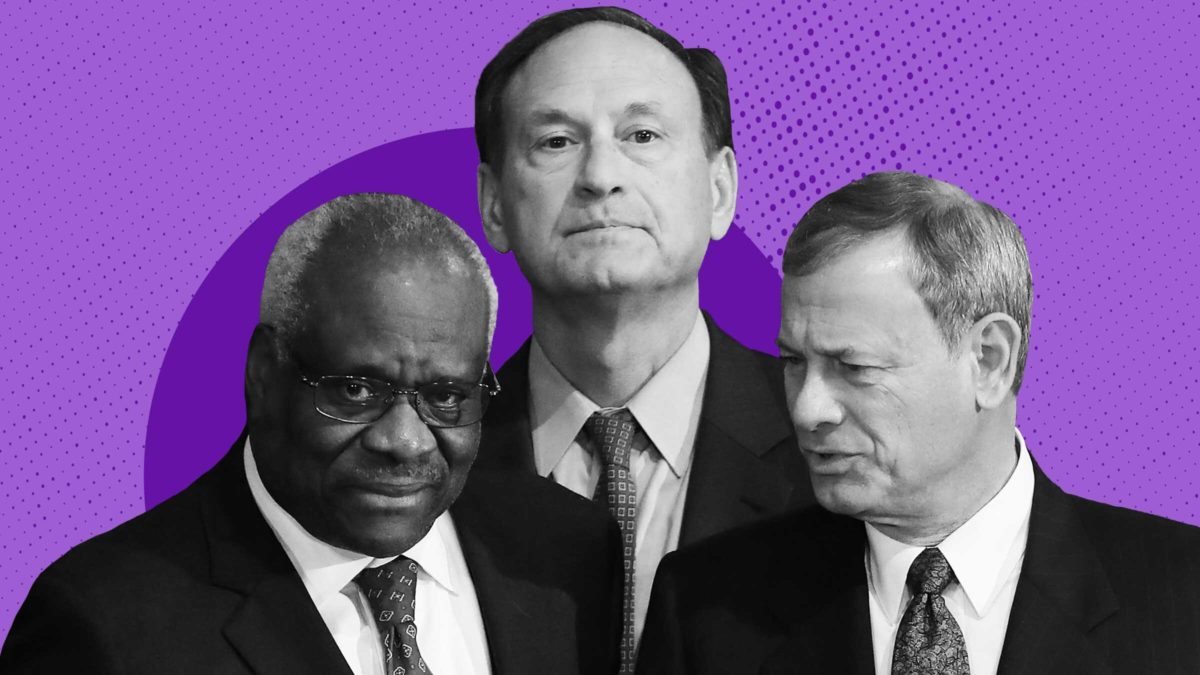
The Court’s two most enthusiastic Trump supporters, Justices Clarence Thomas and Samuel Alito, sounded more solicitous of Sauer’s arguments. Alito in particular focused on the extent to which “temporary visitors” whose children are born in the United States are “lawfully domiciled” in the United States at the time. The Fourteenth Amendment does not make citizenship contingent on one’s domicile, but you can see how this line of thinking dovetails with the Trump administration’s mass deportation agenda: What Alito is getting at is the possibility that, as a legal matter, undocumented people are only “temporarily” in the United States, since masked ICE agents could kidnap and disappear them at any moment.
Other than Alito and Thomas, though, no one else on the Court sounded interested in what Trump was peddling. The justices did press Cecillia Wang, the ACLU lawyer who argued against the Trump administration, about the legal relevance of parental domicile, but in a way that suggested that they find the basic question in Trump v. Barbara to be pretty easy, and are just preparing to write the section of their opinion that rebuts an indignant Alito dissent.
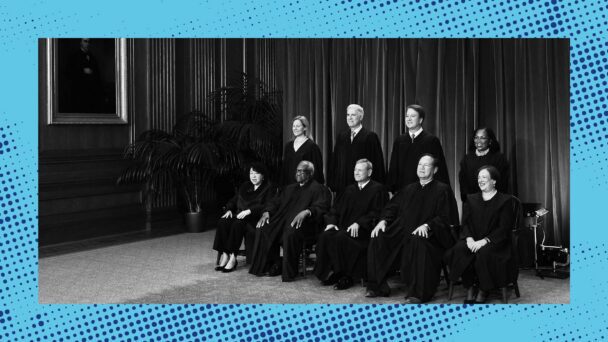
The more ominous takeaway from oral argument in Trump v. Barbara is that a good bottom-line outcome in this case might not be the end of the reactionary movement to end birthright citizenship. Simply by getting an audience with the justices, Trump has managed to transform a long-settled principle of constitutional law into what feels and sounds like a contestable policy position, especially on the political right. Again, even if it takes the form of a dissent in Trump v. Barbara, an anti-constitutional opinion from Thomas or Alito (or both) could lay the groundwork for a more sustained effort to redefine American citizenship as Trump would prefer it.
As it so happens, you do not need to go too far back in time to see how this dynamic works. The Supreme Court decided Roe v. Wade, the 1973 case in which the justices recognized a due process right to access abortion care, by a seemingly lopsided 7-2 vote. But the conservative legal movement never accepted this result as legitimate; instead, it turned Roe into its jurisprudential white whale, and spent five decades organizing around the goal of someday killing it. When the Court finally overturned Roe in Dobbs v. Jackson Women’s Health Organization in 2022, nothing about the law or the underlying legal arguments had changed, really. What had changed is that the people who vowed to end Roe had at last marshaled the five votes they needed to do it.
It is a relief that a majority of the most conservative Supreme Court in a century does not sound inclined to rewrite the Fourteenth Amendment to say what Donald Trump thinks it ought to say. But it was nonetheless unnerving to listen to the Court—the body with the final say on what the Constitution means—spend its time and energy on Wednesday entertaining that possibility. This case made it to the Court because a racist president issued an illegal executive order, and a few conservative law professors reverse-engineered a dogshit legal theory to support it, hoping that he would someday reward their craven obedience with federal appeals court appointments. It is all very stupid and embarrassing, and it might even have been amusing, in a slapstick sort of way, if the rights of hundreds of thousands of babies born every year in this country did not hang in the balance.
The meaning of the Fourteenth Amendment was clear when Congress ratified it, and when the Supreme Court explicitly affirmed that meaning more than a century ago. It was no less clear before oral argument in Trump v. Barbara, and will be no less clear when the Court issues its decision later this year. But even a single vote to end birthright citizenship would be as shameful as anything the Court has done in recent memory. The Constitution’s promises will never be safe for as long as there are justices who are willing to set them aside at Trump’s request.