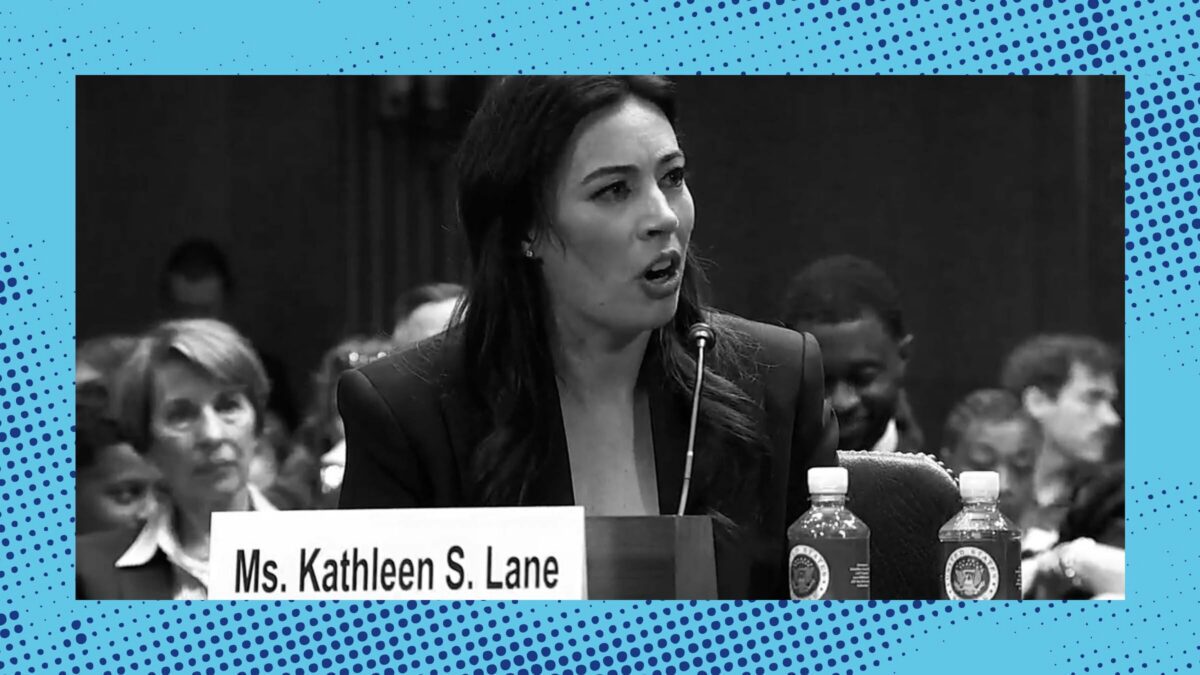
On Tuesday afternoon, the Senate confirmed Jeffrey Kuhlman to serve as a Kansas district court judge, making him the 40th life-tenured federal judge confirmed during President Donald Trump’s second term. He gets to celebrate along with Katie Lane, whom the Senate confirmed to a Montana district court judgeship several hours earlier.
Both Kuhlman and Lane are young conservative lawyers who graduated from the Antonin Scalia Law School. Both refused to say during their confirmation hearings before the Senate Judiciary Committee that Trump lost the 2020 election. And both will now serve—for life—in states where, over his five-plus years as president, Trump has already appointed more judges who are white than the total number of judges of color who have ever served in those states.
Kuhlman and Lane are part of a new generation of lawyers ascending to the federal bench. Since Trump took office in January 2025, 90 percent of his confirmed appointees have been white, and nearly three-quarters are men. Only one of the 40 confirmed judges is a woman of color. None of his second-term judges or judicial nominees are openly LGBTQ, although many have horrific records of attacking LGBTQ equality.
These appointments are entrenching a judiciary that for nearly 250 years has been dominated by white men. The Eighth and Tenth Circuits, for example, have never had a judge who is a woman of color. Since 2017, Trump has nominated nine judges to these courts, all of whom are white. In the Northern District of Alabama, a district that is home to cities rich in civil rights history like Birmingham and Tuscaloosa, Trump has appointed six of the court’s seven judges, and all six are white. (So is the seventh, whom he didn’t appoint.) His latest appointee is Edmund LaCour, who as solicitor general of Alabama played a major role in creating and defending the state’s congressional map, which a federal district court has determined violates the Constitution.
But it’s not just a parade of white people—and mostly white men—being appointed to lifetime positions at a time when the legal profession is more diverse than ever. It is a parade of right-wing extremists and Trump loyalists who don’t dare answer questions in ways that might anger the man who nominated them. And this retreat from the Biden administration’s efforts to diversify the federal bench is not happening in isolation. It is happening at a time when Trump’s policies and appointees—including his three Supreme Court justices—are working together to resegregate institutions across the federal government.
Consider, for example, what his first-term justices and second-term lower court appointees have already accomplished. The Supreme Court’s recent decision gutting the Voting Rights Act could lead to a significant decline in representation by Black members of Congress, and their unraveling of affirmative action in higher education in 2023 has led Black enrollment at many elite schools to decline. Secretary of Defense Pete Hegseth has sought to resegregate the U.S. military, intervening to block the promotions of Black and women officers and those who support them. Trump’s appointee to lead the Justice Department’s Civil Rights Division, Harmeet Dhillon, stated in congressional testimony last year that “either DEI will die itself, or we will kill it.”
Many of the lawyers Trump is elevating to federal judgeships are not merely observers of this agenda—they have been active participants in advancing it. In April 2025, for example, Trump issued an executive order declaring, in part, that “it is the policy of the United States to eliminate the use of disparate-impact liability in all contexts to the maximum degree possible.” Two days later, now-Second Circuit nominee Matthew Schwartz cited that executive order when he urged the Supreme Court to overrule an important decision upholding disparate impact—a legal tool used for decades to combat housing discrimination, among many other forms of discrimination. The Court declined to take up this particular case, but conservative activists like Schwartz will continue swinging for the fences because they understand the friendly audience that awaits them at the Supreme Court when their case is finally heard.
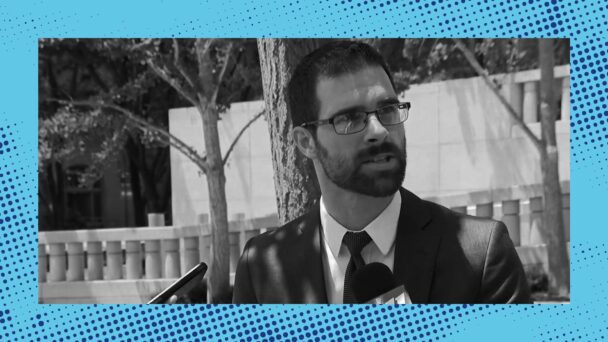
Last June, Sixth Circuit nominee Benjamin Flowers partnered with America First Legal in filing a lawsuit against the University of Michigan and its Michigan Law Review Association “to halt its rampant racial discrimination.” The lawsuit accused the law review of adopting a “radical” DEI agenda in violation of federal civil rights law and the Constitution. That Flowers was working alongside this organization, which was co-founded by Stephen Miller and whose stated priorities include “dismantling DEI,” tells you just how aligned he is with this administration’s priorities.
And Lane, confirmed earlier today to the bench in Montana, stated during a Federalist Society panel in March 2025 that “DEI amounts to racial classification, stereotyping, and sometimes blatant discrimination” and thus violates the Fourteenth Amendment. She then referenced several discrete legal actions that her law firm colleagues were taking to challenge internship and scholarship programs created to provide opportunities to students of color.
Inspired by the demolition of affirmative action in higher education and Trump’s numerous anti-diversity measures, lawyers like Schwartz, Flowers, and Lane are working to lock people of color out of the classroom, the workplace, and democracy. For that, Trump is rewarding them with nominations to lifetime seats on the federal bench.
Federal judges exercise enormous power over the protection of fundamental rights and freedoms, and they derive their legitimacy in part from their positions within a federal judiciary that reflects the nation’s diversity. And while the Trump administration’s staff and policies won’t be here forever, his ongoing appointments of right-wing extremists and loyalists to the judiciary threatens those rights and freedoms for decades to come.