
As the calendar turns to July, the question looming over President Donald Trump’s judicial agenda is not whether Republicans have the votes to confirm his remaining nominees—they do, with some to spare—but whether they have enough time. June brought what is probably Trump’s last fillable court of appeals vacancy before the midterm elections: a seat on the ultraconservative Fifth Circuit. And Trump wasted little time picking one of his recent district court nominees, Anna St. John, for the job.
But while this new vacancy will change Trump’s influence on the Fifth Circuit, it won’t change the Senate calendar. There are only so many hearing dates and only so much time for votes on the Senate floor before the midterms. After that, Trump’s judicial project may have to contend with all manner of additional obstacles—to say nothing of possibly losing control of the upper chamber outright.
Vacancies
Two district judges have created vacancies in the last few months: Eastern District of Virginia Judge Arenda Wright Allen, appointed by President Barack Obama in 2011, assumed senior status back in May, and Eastern District of Kentucky Judge Gregory Van Tatenhove, appointed by President George W. Bush in 2006, will step down sometime in July when he assumes the deanship of the University of Kentucky College of Law.
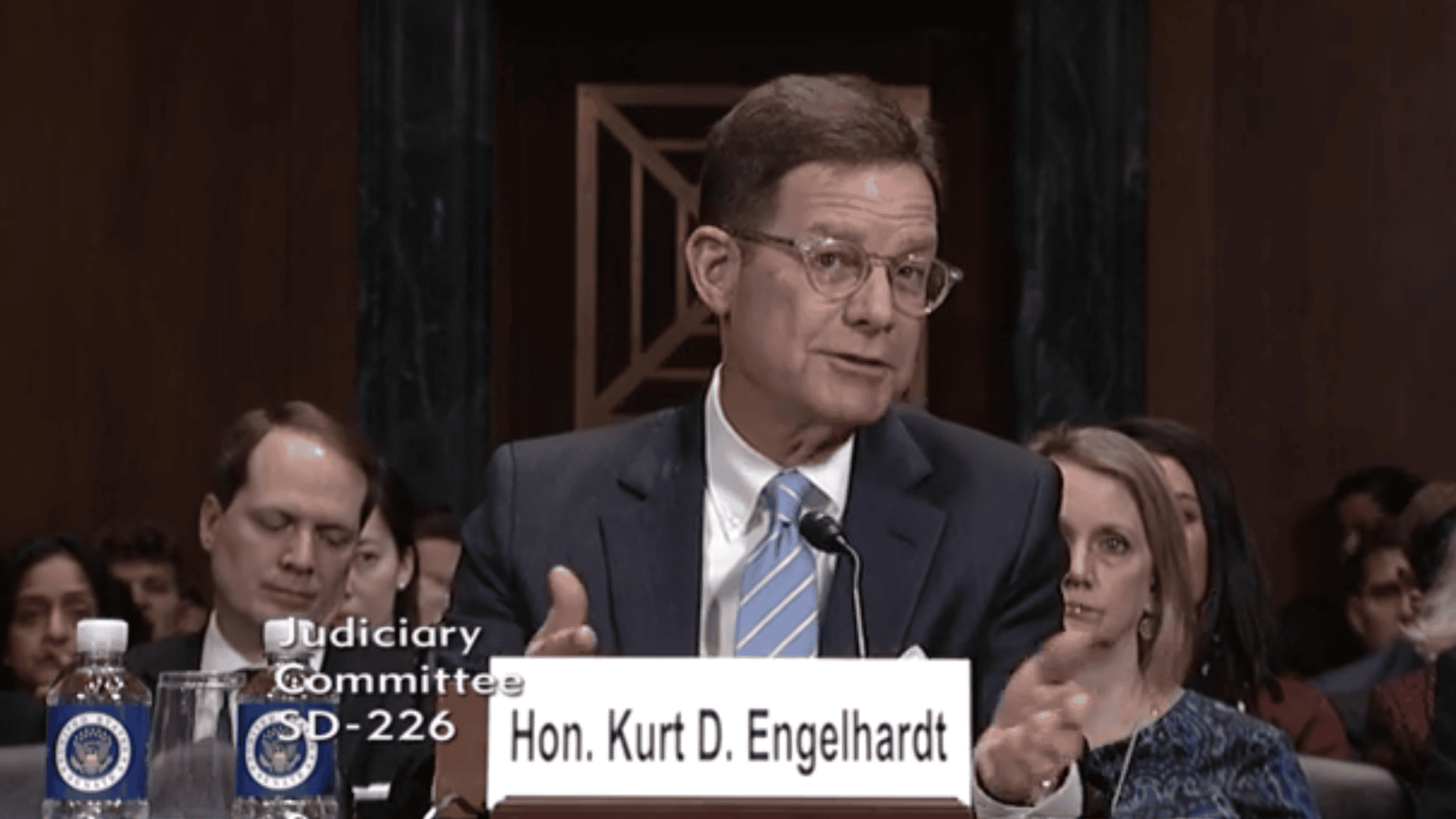
The bigger news, however, is that Trump has one more—and in all likelihood one last—court of appeals vacancy to fill: Fifth Circuit Judge Kurt Engelhardt, appointed by Trump in 2018, informed the White House on June 9 that he would assume senior status when his replacement is confirmed.

Engelhardt was elevated to the Fifth Circuit during Trump’s first term after a relatively quiet 17 years as a trial judge on the U.S. District Court for the Eastern District of Louisiana. As an appeals court judge, however, Engelhardt has let his right-wing freak flag fly. In 2021, he blocked the Occupational Safety and Health Administration’s emergency requirement that most workers either get vaccinated against COVID‑19 or submit to weekly tests and wear masks (and in doing so, he mocked COVID‑19 as a “supposedly ‘grave danger’” as the virus’s domestic death toll hit 750,000).
In 2022, Engelhardt wrote another opinion affirming a preliminary injunction blocking President Joe Biden’s executive order requiring federal contractors to ensure employees were vaccinated, and he joined an opinion refusing to stay an injunction barring the Navy from requiring that special warfare personnel were vaccinated. The latter decision was too much even for our dumbest Supreme Court justice, Brett Kavanaugh, who, in concurring in the decision to reverse, recognized in a rare moment of cerebral function that “the President of the United States, not any federal judge,” gets to command the Armed Forces.
In total, just 45 judges have created vacancies since Trump won reelection in November 2024: eight circuit judges (all appointed by Republican presidents) and 37 district judges (27 appointed by Republicans and 10 appointed by Democrats).
Screencap via Senate Judiciary Committee
Nominees
Although there are 15 vacancies in states with two Republican Senators—some of which have been around since 2024—Trump has announced only three new nominees in the last eight weeks. On May 27, he nominated Matthew Byrne, 44, to the Southern District of Ohio. Byrne currently serves as a state court appellate judge and was recommended for the federal judgeship by Vice President and former Ohio Senator J.D. Vance.
Byrne’s Senate Judiciary Committee Questionnaire has more red flags than a May Day parade in Moscow. At various times, he’s been a member of Cincinnati Right to Life (the stated vision of which is to “build an abortion-free Ohio and America”), the Goldwater Institute’s American Freedom Network, the Hamilton County Republican Party, the National Rifle Association, Pregnancy Center East (an anti-abortion crisis pregnancy center), and, for some reason, the Butler and Warren County Republican Women’s Clubs.
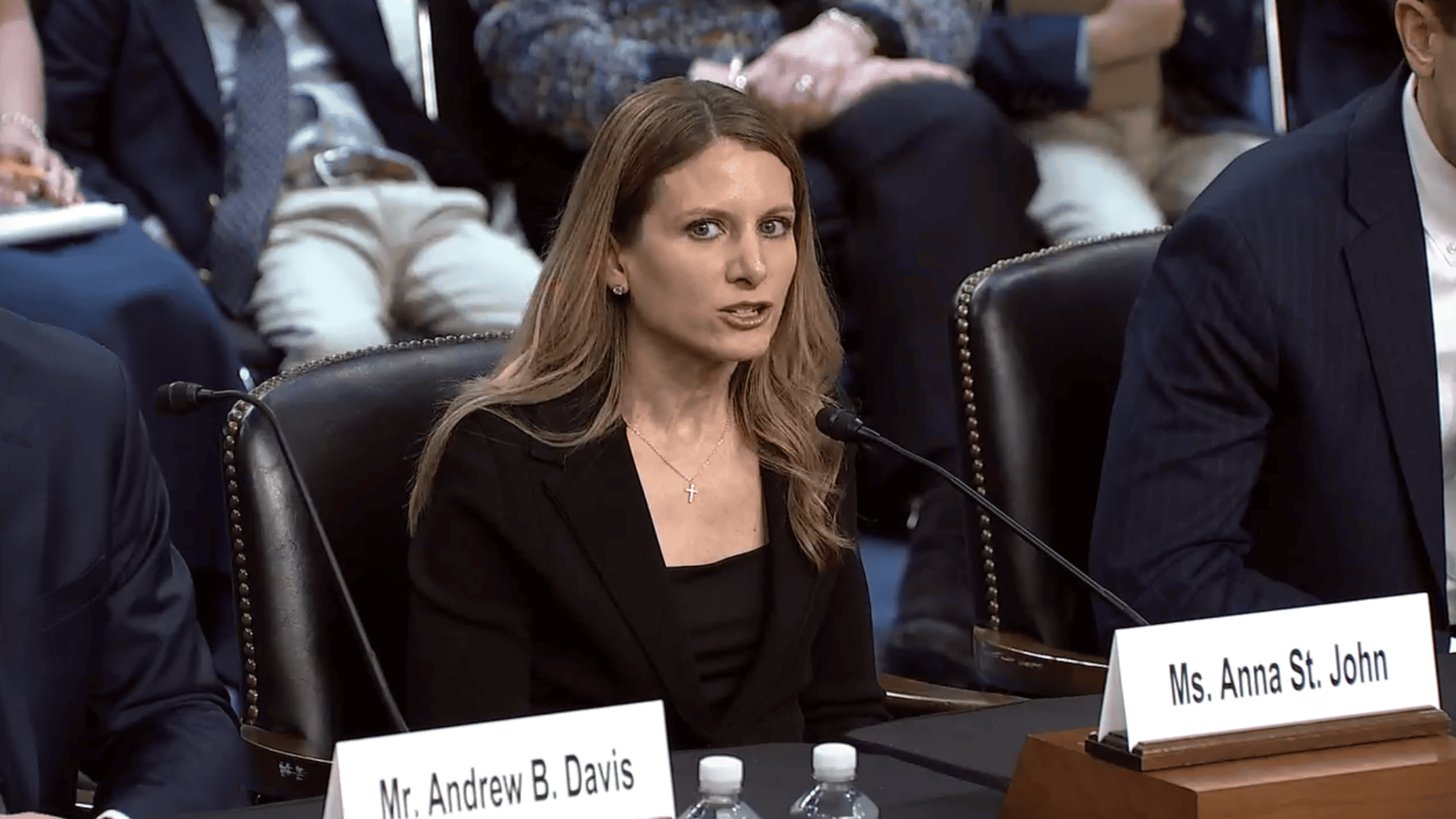
On June 29, Trump nominated Anna St. John, whom the Senate just confirmed to the Eastern District of Louisiana in March, to replace Judge Engelhardt on the Fifth Circuit. As I noted during her district court nomination, St. John, 47, has an extremely troubling civil rights record, with a particular focus on undermining the rights of LGBTQ+ citizens. Most recently, she submitted an amicus brief in West Virginia v. B.P.J., the case in which the Supreme Court upheld state bans on transgender youth participating in school sports. Throughout the brief, St. John pointedly referred to transgender women as “biological males” and peddled the baseless claims that letting transgender kids play sports is dangerous and unfair (because no one has ever been hurt or at a physical disadvantage playing same-sex sports).

During her first confirmation hearing, St. John couldn’t forthrightly admit that Biden won the 2020 presidential election, or bring herself to say that the Capitol was attacked on January 6. And that wasn’t all St. John couldn’t say. In response to a question from Hawaii Democratic Senator Mazie Hirono about whether Griswold v. Connecticut and Eisenstadt v. Baird, landmark Supreme Court cases recognizing a constitutional right to privacy, were settled law, St. John said she “would have to look and see whether they’ve been overturned.” Hard to know whether this lapse was the result of St. John’s wishful thinking or an ominous glimpse into her future Fifth Circuit jurisprudence.
Along with St. John, Trump also nominated Alabama Supreme Court Justice Gregory Cook to the Northern District of Alabama. Cook, 63, has been a state court judge since 2022 after he won election by successfully campaigning against “the woke mob.” In a radio interview in 2022, he questioned the results of the 2020 election in Pennsylvania, which Biden won, “because their supreme court agreed with their secretary of state, who was a Democrat,” about how to fairly count votes. As it turns out, Cook is no stranger to meddling in elections in other states—he also helped President George W. Bush’s campaign with ballot recounts in Florida in 2000.
Screencap via Senate Judiciary Committee
Hearings
The Senate Judiciary Committee held two hearings in June. On June 10, the Committee heard from Eighth Circuit nominee Daniel Traynor and district court nominees Angela Colmenero (Southern District of Texas), Michael Martin (Eastern District of Michigan), Kasdin Mitchell (Northern District of Texas), and Antonio Pozos (Eastern District of Pennsylvania). And on June 24, it heard from Tenth Circuit nominee Daniel Domenico and Southern District of Ohio nominee Matthew Byrne.
Both hearings were largely unremarkable (as far as Trump nominee hearings go), with two notable exceptions. First, Martin and Pozos were only able to appear because Democratic senators from their states—Michigan Senators Gary Peters and Elissa Slotkin for Martin, and Pennsylvania Senator John Fetterman for Pozos—returned their blue slips. Blue slips—literal blue pieces of paper used by home-state senators to signal their approval of or opposition to a nominee in their state—are, by custom, required before the Judiciary Committee will give a nominee a hearing. Peters, Slotkin, and Fetterman are the first Democratic senators to return them for any judicial nominees during Trump’s second term.
Second, some of these nominees debuted a new gloss on the usual non-answers to questions about the 2020 election and January 6. Martin, followed by Colmenero and Pozos, said that Biden won the 2020 election “as a matter of law,” and all acknowledged that he “received more Electoral College votes.” But none were willing to say that Biden won the popular vote, with Martin responding that “the popular vote is not the operative fact.” Martin also said that the Capitol was “damaged and vandalized” and that law enforcement officers “were attacked” on January 6, although he studiously avoided saying by whom or at whose direction.
In an attempt to justify her cooperation with Trump, Slotkin issued a statement before Martin’s hearing indicating that, in discussions with her, Martin had given “fundamentally different” answers than Trump’s other nominees to those questions, and she expected Martin to “convey the same” before the committee. Having heard Martin’s answers now, you can judge for yourself whether Slotkin has any business evaluating judicial nominees in the future.

What’s Next
The Senate has only four more weeks in session before the start of the August recess, and Senate Majority Leader John Thune has already teed up confirmation votes for Southern District of Texas nominee Rob Jones and Second Circuit nominee Matthew Schwartz during the week of July 13. Three more nominees—Sixth Circuit nominee Benjamin Flowers, Southern District of Florida nominee Jeffrey Kuntz, and Court of International Trade nominee Kara Westercamp—are on the floor and could move at any time. Five more nominees—Traynor, Colmenero, Martin, Mitchell, and Pozos—should be voted out of committee on July 16.
The Senate schedule permits two more Judiciary Committee nominations hearings before the recess. One of those—the July 15 hearing—will deal with Todd Blanche’s nomination to be Attorney General. Thus, only one more hearing can accommodate judicial nominees, and it will probably occur on July 29, and probably with St. John, Cook, and a few nominees for the U.S. Sentencing Commission in attendance.
A quick word on why the start of the August recess is such an important deadline for judicial nominees: Given the time it takes to process nominees, the earliest those nominees from the July 29 hearing could be ready for confirmation is Monday, September 28—the last week the Senate is in session before the midterm elections. (If the Senate were to hold a hearing in September, those nominees wouldn’t get to the floor until November 30.)
This matters for Thune because attendance for confirmation votes is likely to be much better before the midterms than after the election is over. Several Republican senators are already lame ducks, thanks to Trump-backed challengers, and others are either retiring or running for a different office. If Senate Democrats force procedural votes on every step of the confirmation process during the lame duck—as Senate Republicans did in November 2024—it’s far from clear how many outgoing Republicans will be keen on sticking around into the wee hours day after day to keep things moving.
So, while the schedule may permit Republicans to confirm nominees after the midterms, the risks of waiting are considerably higher, and they know it. Look for them to clear the decks as much as possible before they leave in October for the last campaign-trail push before the midterms.