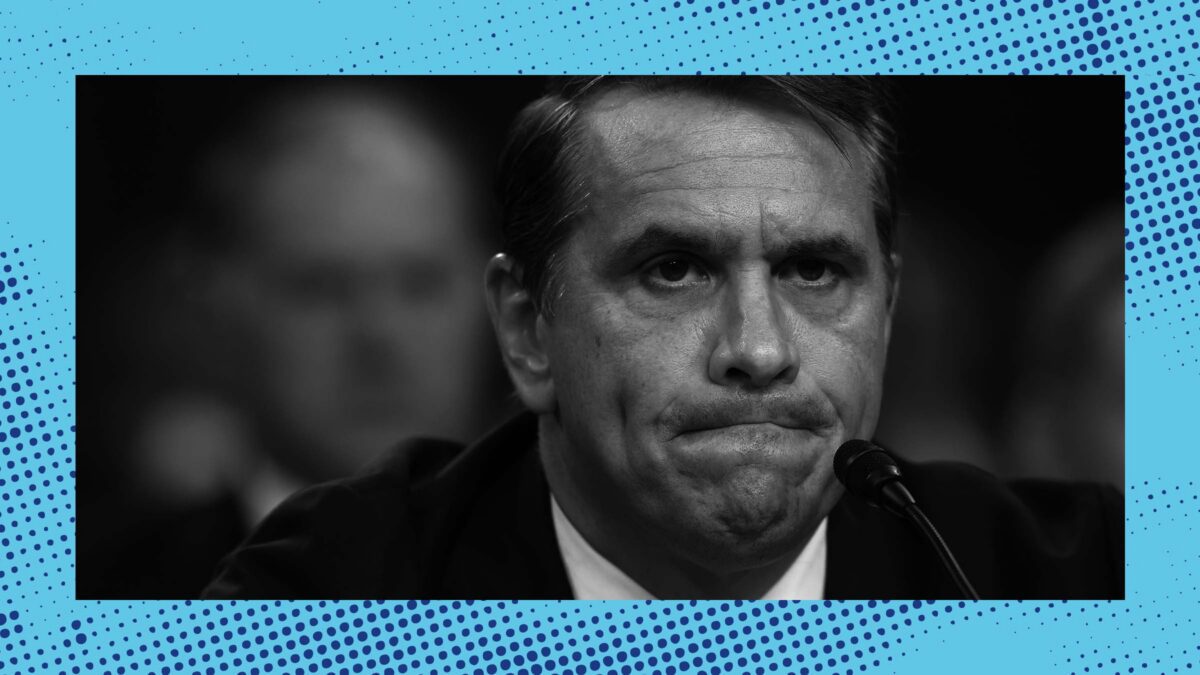
The Senate Judiciary Committee held a marathon hearing on Wednesday to consider President Donald Trump’s nomination of Todd Blanche to be the next attorney general. In March 2025, Republican senators confirmed Blanche as deputy attorney general, and Blanche has served as the acting attorney general since Trump fired Pam Bondi in April 2026.
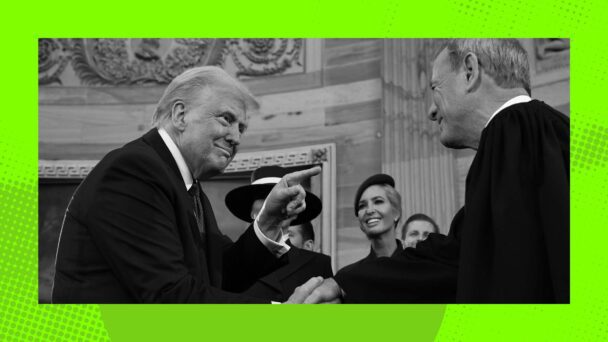
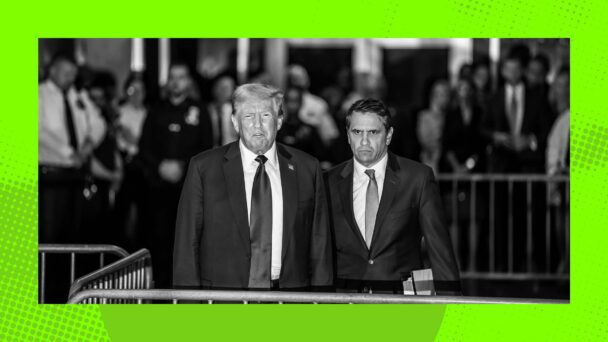
For Blanche, working in Justice Department leadership isn’t so different from his previous gig: working as Trump’s personal attorney. From 2023 to 2025, Blanche represented Trump in matters that included the classified documents case in Florida; the election sabotage case in Washington, D.C.; and the hush money case in New York, which resulted in Trump’s 34 felony convictions.
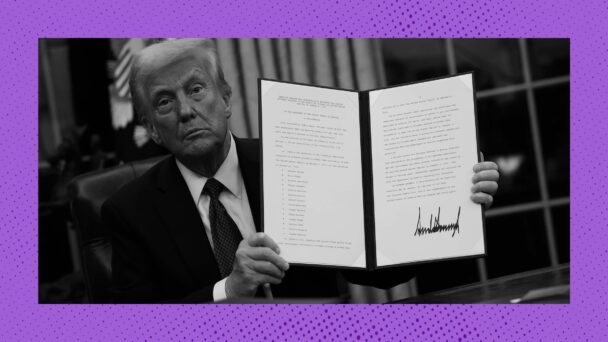
At the Justice Department, Blanche has led the administration’s prosecution of Trump’s perceived enemies. He has brushed off concerns about the failure to prosecute people connected to Trump’s friend, Jeffrey Epstein, saying that it “isn’t a crime to party” with the notorious child sex trafficker. And he has spearheaded an effort to “settle” Trump’s meritless lawsuit against the Internal Revenue Service—an agency Trump controls as president—by creating a $1.776 billion slush fund to compensate victims of Biden-era “lawfare and weaponization.” The so-called settlement would also relieve Trump of any legal or financial liability for past tax fraud.
As the nation’s top law enforcement officer, the attorney general has a responsibility to all people in the United States. Blanche still views himself as responsible to one person, whose name is Donald Trump.

But at Wednesday’s hearing, Blanche’s manifest unfitness for the role posed little obstacle to Republican senators’ willingness to support him. When not going off on angry tangents about the Biden administration, the Republican senators largely sang Blanche’s praises. In one representative exchange, Senator John Kennedy of Louisiana claimed that “no fair-minded person” could possibly conclude that Blanche wasn’t qualified for the job.
The one potential sticking point for Blanche was the slush fund. At a Senate Appropriations Committee hearing on May 19, Rhode Island Democratic Senator Jack Reed asked Blanche if he could ensure that funds would not be disbursed to January 6 insurrectionists, and Blanche declined to do so. The following day, when a reporter asked Blanche if he would be okay with payouts for people convicted of beating cops at the Capitol, Blanche responded, “People that hurt police get money all the time.”
By June 1, a handful of Republican senators suggested (mostly in private) that taxpayer funds for people who tried to kill them may go too far. And on June 2, Blanche testified before Congress that the fund was off. He provided nothing to back that up, however, leaving some senators with outstanding questions, which they pushed him to answer at Wednesday’s hearing.
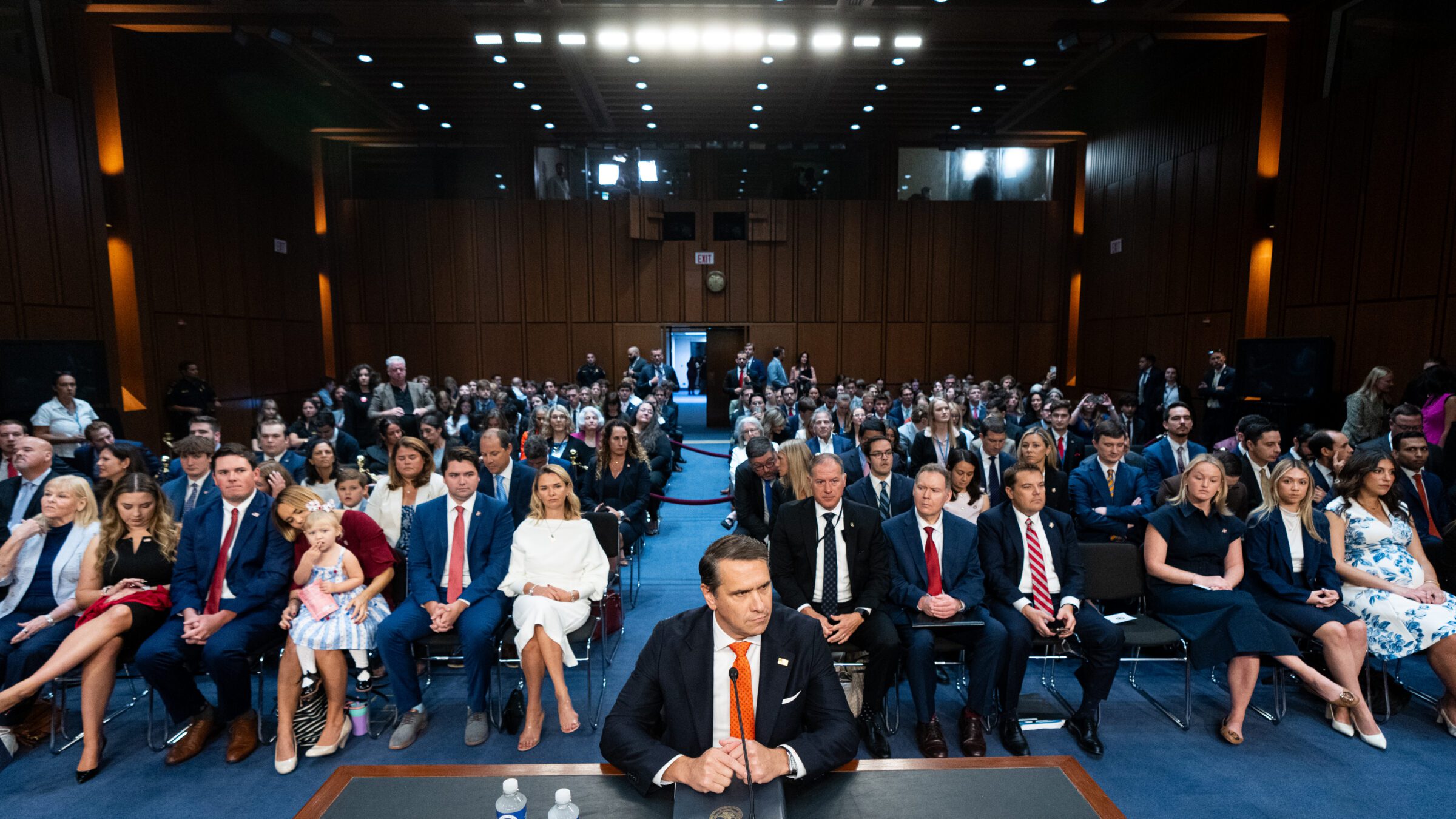
(Bill Clark/CQ-Roll Call, Inc via Getty Images)
In an exchange with Texas Republican Senator John Cornyn, who lost his primary election earlier this year, Blanche said that “there is no weaponization fund.” According to Blanche, the fund is “dead” and “not moving forward.” Cornyn then directed Blanche to the fourth page of the agreement, which states that it may only be modified with the written agreement of the parties. “Has there been a written agreement of the parties to modify the settlement fund?” asked Cornyn. “No,” said Blanche. “The settlement fund’s just not moving forward.”
Cornyn, who had spent the days leading up to the hearing suggesting that his support for Blanche was contingent on Blanche’s abandonment of the slush fund, then asked if the settlement constituted a contract that Trump could seek to enforce. Blanche said that it does. “I suppose they could say we breached by not moving forward,” he said.
Based on Blanche’s answers to Cornyn’s questions, Democratic Senator Chris Coons suggested that reports of the January 6 fund’s demise have been greatly exaggerated. “I’m concerned it’s not dead yet,” he said. Hawaii Democratic Senator Mazie Hirono similarly observed that, by the settlement’s terms, Blanche could “revive it at any time.” North Carolina Republican Senator Thom Tillis, who is retiring at the end of the year, basically pleaded with Blanche to help the Republicans get him across the finish line by squashing the weaponization fund for real. “I want to stick a fork in this turkey,” he said.
It is reasonable for Cornyn and Tillis to want real assurances that the slush fund is dead. But doing so overlooks the problems with Blanche’s creation of the slush fund in the first place. Earlier this week, a federal judge found that Blanche’s actions in Trump v. IRS reflected an abdication of his responsibility to “zealously defend” the interests of the United States. The judge had a copy of the court’s opinion sent to the New York bar, which is currently conducting disciplinary proceedings following an ethics complaint about Blanche.
In other words, a couple of Republicans have mild doubts over whether Blanche is qualified to be the top attorney in the country. They should have strong doubts over whether he’s qualified to be an attorney at all.