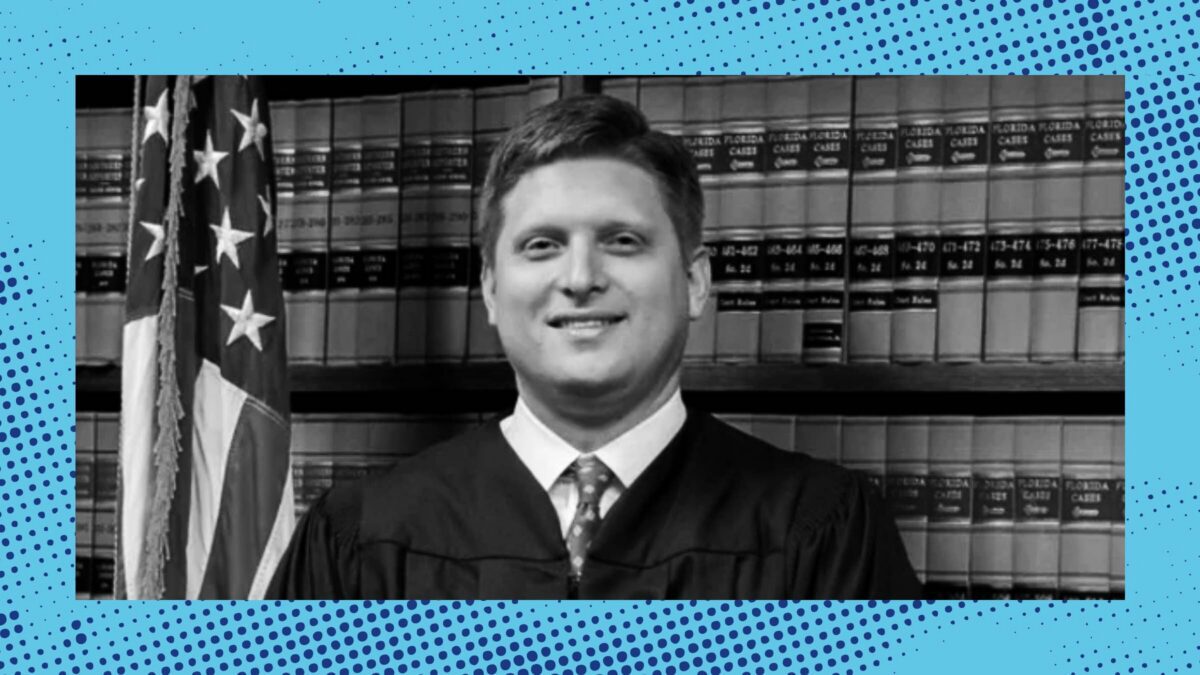
In November 2024, shortly after President Donald Trump won a second term in the White House, an ambitious Florida state appeals court judge reached out to the office of Florida Republican Senator Rick Scott and asked for a favor: When the White House is ready to fill federal district court vacancies, the judge asked, would you keep my name in mind?
Around this time, the judge had a stroke of incredible luck: He was randomly assigned to a three-judge panel on a case in Florida in which Trump, in his personal capacity, was suing the Pulitzer Prize Board. Trump’s theory was that the Pulitzer Board had defamed him in the course of refusing his demand that it rescind its awards to The New York Times and The Washington Post for their reporting on Russian interference in the 2016 presidential election—a subject Trump referred to as the “debunked Russia Collusion Hoax.”
Before the 2024 election, Trump had given every indication that as a second-term president, he would place an even greater premium on whether potential judicial nominees had adequately demonstrated their loyalty to him. Suddenly, a state court judge who badly wanted Trump’s attention was presiding over a politically charged case that was sure to earn it.
The judge made the most of his good fortune. Despite his expressed interest in receiving a huge promotion from one of the two parties before him, the judge did not recuse himself from the Pulitzer case; instead, in February 2025, he voted to allow Trump’s lawsuit to proceed in state court, affirming a lower court’s denial of the Pulitzer Board’s motion to dismiss. Although the panel opinion in Alexander v. Trump did not reach the merits of Trump’s defamation claim, it was nonetheless an important legal victory for a man who is simultaneously serving as President of the United States and trying to sue his critics out of existence.
A few weeks later, the judge got the news he’d been hoping for: Sure enough, the president was interested in tapping him for a federal district court seat in Florida. A subsequent Truth Social post made it official: Trump called it his “Great Honor” to nominate the judge, and praised his steadfast commitment to upholding the rule of law.

If any of this sounds familiar, it is because I and many others covered this story last summer, when the judge, Ed Artau, sat for his confirmation hearing before the Senate Judiciary Committee. Although he squirmed a little under questioning from Connecticut Senator Richard Blumenthal, Republicans closed ranks, and in September, Artau was confirmed on a party-line vote.
Now, incredibly, the exact same thing is happening again: Jeffrey Kuntz, a Florida appeals court judge who sat on the same three-judge panel as Artau, is also up for a federal judicial vacancy in the Southern District of Florida. Like Artau, Kuntz had reached out to Scott’s office in November 2024 to throw his hat in the ring for a federal judgeship. Like Artau, Kuntz was then assigned to the Alexander panel. Like Artau, Kuntz did not recuse himself from the case, and voted in Trump’s favor. And like Artau, Kuntz was invited by the White House Counsel’s office to interview for a federal judgeship that same month.
The major difference between the two men’s strategies is that, unlike Artau, Kuntz did not write a gratuitous concurring opinion in Alexander that quoted Trump’s descriptions of the Russia reporting as “FAKE NEWS,” a “phony Witch Hunt,” and a “big hoax.” Also unlike Artau, Kuntz did not call on the U.S. Supreme Court to overrule New York Times v. Sullivan, a 1964 case in which the justices created broad First Amendment protections for journalists who report on public officials. Generally speaking, within the status-obsessed legal profession, when lowly state court judges are bold enough to publicly suggest that the Supreme Court overrule a 60-year-old precedent, their actual intended audience is someone else.
But the only penalty Kuntz paid for being marginally less thirsty than Artau was having to wait a little longer for the payoff. Kuntz’s nomination came earlier this month, and he will sit for his Senate confirmation hearing on Wednesday, April 29.
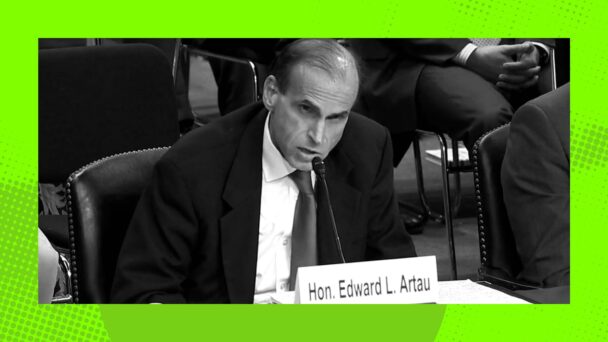
To date, between their alarming social media timelines, their willingness to play footsie with stolen-election conspiracy theories, their refusal to condemn the January 6 insurrection, and their complicated thoughts about whether disabled people should get married, Trump’s second-term judicial nominees have provided Democratic senators with plenty of fodder for confirmation hearings. Kuntz, bless him, is making their job easier than ever. The senators who grilled Artau about his selection process last year don’t even have to come up with new questions to ask; they just have to do a quick find-and-replace before Kuntz’s hearing starts.
The fact that Kuntz can merrily traipse down the exact same trail that Artau blazed less than a year ago reveals just how openly transactional Trump’s nominations process has become. As I wrote regarding Artau, for Republican lawyers who aspire to the federal bench, creating what used to be a howlingly obvious conflict of interest is no longer disqualifying; instead, it is the surest way of proving their bona fides. At this point, the third judge on the Alexander panel should be kind of offended that the White House has not (yet) repaid him for his troubles.
The legal profession takes great pride in its ostensible ability to police the occasional ethical lapses of its less scrupulous members. As Patrick McNeil points out at Nominations Notes, Artau’s failure to recuse himself in Alexander made him the subject of a formal ethics complaint filed with the Florida Judicial Qualifications Commission. In theory, for doing the same thing, Kuntz should be subject to the same sorts of consequences.
The challenge here is that state-level disciplinary bodies are not meaningful threats to canny lawyers on whom the President of the United States chooses to bestow life tenure. The Florida Judicial Qualifications Commission can only issue recommendations to the Florida Supreme Court, and neither body has any power over federal judges. Now that the Senate has confirmed Artau, the only remaining method of disciplining him is impeachment and removal, which would require 67 votes in a Senate in which Republicans hold 53 seats.
If the Senate confirms Kuntz, he, too, will thereafter be functionally immune from meaningful accountability. There will be no asterisk next to his name, and no limitations on his power commensurate with the things he did to get it. He will be just another Trump judge who understood the game, played it well, and was rewarded for it.