With few judicial vacancies to fill, President Donald Trump is using each opportunity to pack the courts with proven loyalists. His recent appellate picks—Benjamin Flowers, Matthew Schwartz, and Justin Smith—have records advancing right-wing causes and defending Trump personally, leaving little doubt about where they stand or what they’ll do once on the bench.
If there’s a silver lining, it’s that time is running out. With only a handful of Senate Judiciary Committee hearing dates left before the August recess, a limited pool of vacancies, and Republican control of the Senate in real jeopardy, Trump’s window to reshape the federal courts a second time may be closing.
Vacancies
For most of Trump’s second presidency, new judicial vacancies have been few and far between. In total, 36 judges—seven appeals court judges and 29 district court judges, 29 Republican appointees and seven Democratic appointees—have created vacancies in the nearly 18 months since Trump won re-election in November 2024.
Back in February of this year, when three powerful court of appeals judges decided to retire within the span of a week, it looked like Trump might finally get the vacancies he needed to remake the judiciary a second time. But in the seven weeks since, only two more judges have decided to retire. The first was Middle District of North Carolina Judge William Osteen, Jr., who announced on March 13 that he would take senior status—a form of semi-retirement—in January 2027. The second (and more important) was Eighth Circuit Judge Ralph Erickson, who announced on April 7 that he would go senior when a successor is confirmed. Both Osteen and Erickson were appointed to the district courts by President George W. Bush in 2007, and Trump elevated Erickson to the Eighth Circuit in 2017 during his first term. Erickson is the first Trump-appointed circuit judge to go senior; one other, Fifth Circuit Judge Kurt Engelhardt, is eligible to do the same.

Erickson is arguably the least partisan circuit judge from Trump’s first term, and has shown a willingness to rule against the administration and Republican state governments on politically-charged issues like immigration and voting rights. Whoever Trump picks to replace Erickson will surely be to his right, making this one of the more impactful appointments Trump will get to make.
Already, no appeals court in the country has a higher proportion of Republican appointees than the Eighth Circuit: Ten of the court’s 11 active judges and its lone senior judge were all appointed by Republican presidents. Four of the ten are Trump appointees; with two more vacancies for Trump to fill, the court will likely remain lopsided for another generation.
Nominees
On April 1, Trump nominated John Marck and Arthur Jones to the Southern District of Texas, Jeffrey Kuntz to the Southern District of Florida, and Michael Hendershot for the Northern District of Ohio. Both Marck, 43, and Jones, 56, are career prosecutors. Kuntz, 44, was in private practice before then-Florida Governor Rick Scott appointed him to the state appellate bench in 2016. Hendershot, 51, is Ohio’s chief deputy solicitor general, and clerked for Fifth Circuit Judge Jerry Smith.
Trump also recently announced two picks for the courts of appeals—courts with the power to shape the law for states within their jurisdiction, and the courts of last resort for nearly all federal cases. Last Thursday (and as I predicted), Trump nominated former Ohio Solicitor General Benjamin Flowers to the U.S. Court of Appeals for the Sixth Circuit. Flowers, 39, is a former law clerk to Supreme Court Justice Antonin Scalia and Ninth Circuit Judge Sandra Segal Ikuta. The day after nominating Flowers (and also as I predicted), Trump drew once again from the deep well of his personal lawyers and nominated Sullivan & Cromwell partner Matthew Schwartz to the U.S. Court of Appeals for the Second Circuit. Schwartz, 47, is part of an S&C team that took over for Todd Blanche and Emil Bove in the Stormy Daniels hush money case, and also represents Trump in a civil fraud suit brought by New York Attorney General Letitia James.
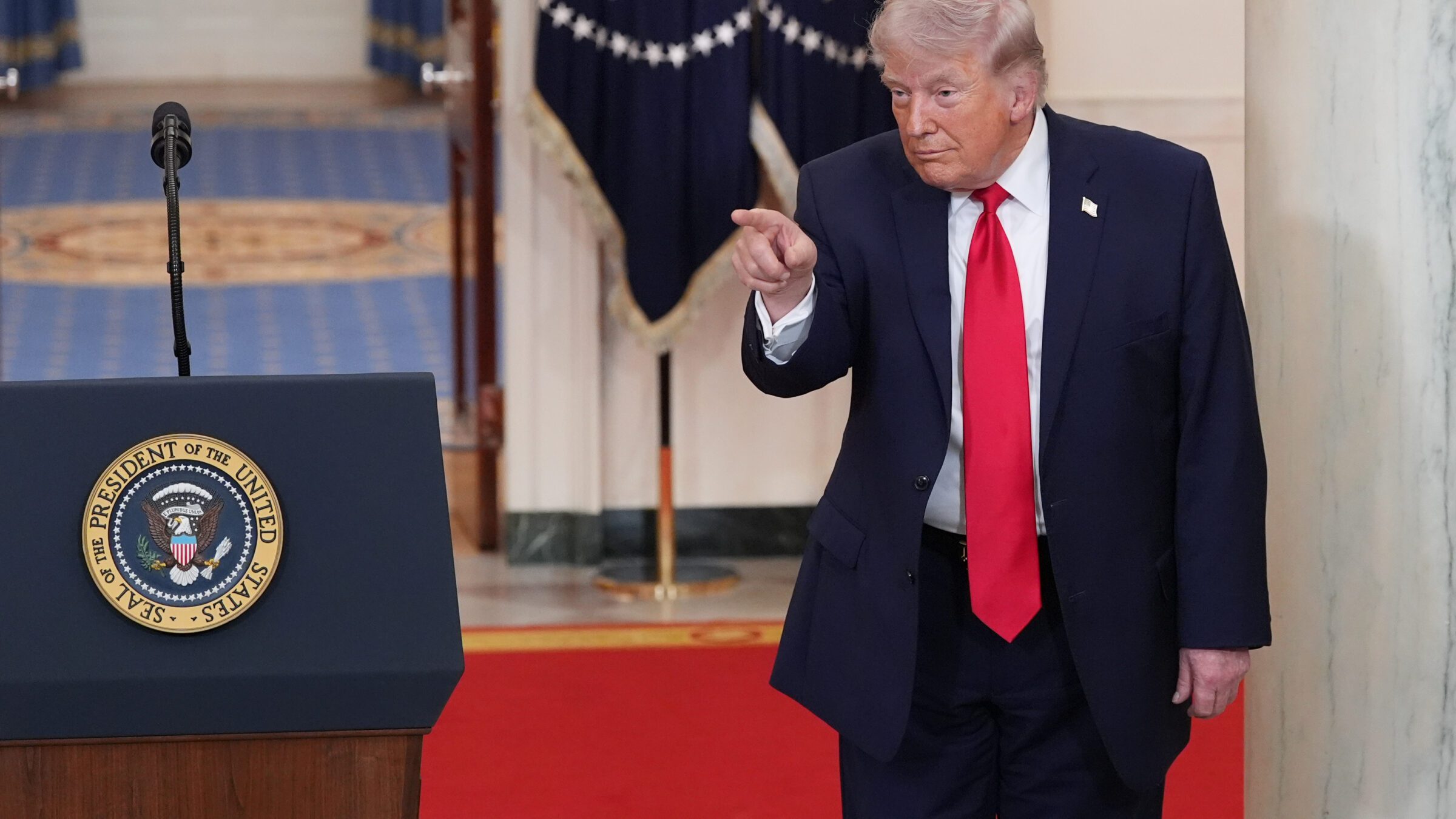
(Photo by Alex Brandon-Pool/Getty Images)
Flowers has spent his entire career focused on advancing conservative causes too numerous to cover here. But as a representative sample, as Ohio’s solicitor general, Flowers argued in favor of Ohio’s restrictions on abortion, including banning abortions at 6-weeks and imposing criminal penalties for doctors who perform an abortion based on a Down syndrome diagnosis. He also led a multistate challenge to the Biden administration’s COVID-19 vaccine-or-test mandate, arguing that COVID-19 was not “an occupational danger that OSHA may regulate” because it did “not present a ‘grave’ danger for many employees subject to the [vaccination] mandate.” Flowers, who himself was vaccinated and boosted, made the arguments remotely because he had tested positive for COVID-19 the week before.
At first blush, Schwartz looks more like a George W. Bush judicial nominee: Ivy League education, prestigious clerkships, and a long career as a BigLaw partner. But look a little closer and Schwartz has all the telltale signs of a frontline conservative. He was President of Columbia Law School’s Federalist Society chapter and remains active in the organization. He also twice clerked for Samuel Alito, first when Alito was a circuit judge and then again when he became a Supreme Court justice. A 2006 Above the Law preview of Alito’s first-term clerks described him as a “hardcore Federalist Society-type ideologically.”
Sources in that same Above the Law piece also described Schwartz as a “very decent guy,” and I have to acknowledge that that’s consistent with my own experience with Matt. Matt was my advisor and mentor during my five years at Sullivan & Cromwell, and we worked closely together on several cases. As a result, there is part of me—naively or selfishly, perhaps—that hopes that when asked at his confirmation hearing, Matt will say that President Joe Biden won the 2020 election and that January 6 was a violent insurrection. The fact that all of Trump’s other nominees have refused to do so suggests that I’ll be disappointed.
Hearings
On March 25, Sheria Clarke (District of South Carolina), Kara Westercamp (Court of International Trade), and Katie Lane (District of Montana) appeared before the Senate Judiciary Committee. Lane, a 32-year-old trial court nominee, is the first of Trump’s second-term nominees deemed “Not Qualified” by the American Bar Association, because her entire trial experience amounts to a single four-day bench trial for which she served as “associate council [sic]” and during which she conducted a single cross-examination. When Democratic Senators Adam Schiff and Chris Coons pressed Lane on her lack of experience, she reassured them that she took a deposition, too.
Judiciary Committee Democrats also questioned Westercamp about her prolific and deeply disturbing Twitter/X presence. Rather than disavow the conspiracy theories she peddled, Westercamp offered a general apology for using social media and acknowledged that Twitter may not be the “right platform” for political discourse. Perhaps she’ll take her act to Truth Social.

And of course, for good measure, all three nominees refused to say that Biden won the 2020 election. This led to a particularly embarrassing moment for Westercamp: When she tried to hide behind the Trump-approved “Biden was certified the winner” answer, Democratic Senator Richard Blumenthal cut her off. “I know what you think of certification,” Blumenthal said, “because you tweeted on January 6” that “a certified lie is still a lie.”
On Thursday, four more nominees came before the Committee: Justin Smith, whom Trump nominated to the Eighth Circuit, and Anthony Powell, Anthony Mattivi, and Jeffrey Kuhlman, all of whom Trump nominated to the District of Kansas.
It’s hard to pinpoint exactly which part of Smith’s record demonstrated his patent unfitness for the bench. Some pointed to his efforts to aid a red-state gambit to overturn the results of the 2020 presidential election. Others highlighted the extreme right-wing rhetoric he used in a 2024 Breitbart op-ed urging conservatives to back a Missouri Attorney General candidate who would fight the “radical left” and stop the “woke ideology invading our schools.” And others still focused on Smith’s personal loyalty to Donald Trump, evidenced by Smith’s attempt to overturn the jury verdict finding Trump liable for sexual abuse and defamation against author E. Jean Carroll, as well as Smith’s participation in Trump v. United States, the case in which the Supreme Court granted Trump sweeping immunity from the many crimes he had committed during his first term, and the even greater number of crimes he continues to commit in his second.
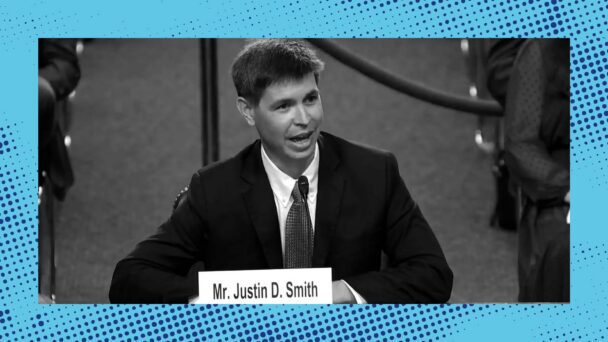
On that front, California Democratic Senator Adam Schiff asked Smith whether that immunity extended to a president’s order to SEAL Team 6 to assassinate a political opponent. Instead of giving the only conceivable answer to that question—a resounding “no”—Smith called the hypothetical “outlandish.”
Louisiana Republican Senator John Neely Kennedy tried to assuage concerns about Smith’s loyalty to Trump. When he asked Smith whether he would actually pick up the phone and call Trump to ask how he should vote in a case, Smith said that he “would not.” That is precisely the point: Trump chose Smith because he knows Smith would never need to ask.
What’s Next
In terms of current nominees, Clarke, Lane, and Westercamp will be voted out of Committee on April 23 and eligible for floor consideration the following week. Hendershot, Jones, Kuntz, and Marck will have their hearing on April 29. Flowers and Schwartz will have their hearing on May 13. Smith, Powell, Mattivi, and Kuhlman will be voted out of Committee on May 14 and eligible for floor consideration on May 18.
Looking further ahead, there are only six more Judiciary Committee hearing dates available before the August recess according to the Senate legislative calendar: April 29, May 13, June 3, June 17, July 15, and July 29. As noted above, the April 29 hearing should only include the four district court nominees announced on April 1, and Flowers and Schwartz should appear on May 13.
For Trump, the problem is that in order for a nominee to be eligible for that last hearing on July 29, the White House would need to announce them by July 1, in order to give the Judiciary Committee enough time to review their records. (By custom, the Judiciary Committee needs at least four weeks to vet a nominee before a hearing.) Working backwards from that date, and using the roughly seven weeks it took the White House to find nominees for other recent appeals court vacancies, a retiring judge would have to give the White House notice by mid-May, about a month from now.
And that’s just to fill the last hearing, which can only accommodate so many nominees. To pack those earlier hearings with nominees, Trump needs more vacancies to fill and he needs them now—like, right now. But given the number of retirement-eligible Republican-appointed judges who could have retired by now and haven’t, I’m optimistic that he won’t get them.