Winston Hencely, an Army specialist stationed at Bagram Airfield in Afghanistan, was attending a Veterans Day 5K in 2016 when he saw Ahmad Nayeb walking towards a crowd of over 200 people gathered at the starting line. Nayeb worked for the Fluor Corporation, a government contractor providing support services at the airbase. His supervisors hadn’t noticed that Nayeb had walked off the job wearing an explosive vest, or that he’d spent four months building it at his worksite. But Hencely, who was 20 at the time, noticed that Nayeb and his bulky vest looked out of place among the soldiers wearing running gear, and stopped to question him. Hencely had a hand on Nayeb’s shoulder when the bomb went off.
Hencely was permanently disabled by the blast, and sued Fluor for its negligence. But lower courts threw out his case on the grounds that Fluor is entitled to immunity under the Federal Tort Claims Act. That 1946 law allows people to sue the government if they’re injured by government employees, but not if the injuries arise out of “combatant activities.” The lower courts figured that Fluor was so integrated into the government’s “combatant activities” that Fluor should get government immunity, too.
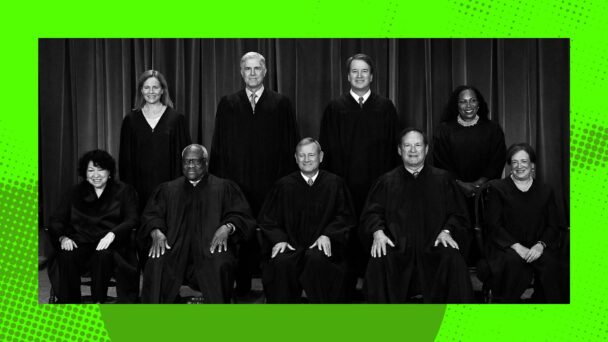
Hencely appealed, and on Monday, the Supreme Court heard oral argument in Hencely v. Fluor Corporation to determine if the Federal Tort Claims Act allows him to bring a lawsuit against the company. Under the plain text of the FTCA, the answer to this question should be: obviously he can. The statute immunizes the government from liability for combat-related injuries, but explicitly clarifies that it does not cover “any contractor with the United States.”
Under Supreme Court precedent, however, the answer to this question is: maybe he can’t. The source of the confusion is the Court’s 1988 decision in Boyle v. United Technologies Corporation. David Boyle was a Marine pilot who died in a training exercise caused by a helicopter manufacturer’s faulty design. His family sued the manufacturer and won at trial, but in Boyle, the Supreme Court used the FTCA as justification to insulate the manufacturer from liability.
Writing for a five-justice majority, Justice Antonin Scalia argued that the FTCA grants the government immunity from lawsuits based on “discretionary functions”—like the procurement of military equipment—in order to prevent judges and juries from “second-guessing” these decisions. And since allowing Boyle’s family to sue the manufacturer would invite this second-guessing, Scalia concluded, the FTCA must cover the contractor, too. “It makes little sense to insulate the Government against financial liability for the judgment that a particular feature of military equipment is necessary when the Government produces the equipment itself, but not when it contracts for the production,” he wrote.

(Photo By Tom Williams/Roll Call)
Scalia is one of the intellectual titans of the conservative legal movement. And he was famous for promoting textualism—the idea that judges should only base their rulings on a law’s text, and not its context or other considerations. But in Boyle, he effectively put the text aside, relying instead on his own feelings about what seemed like good legislation. In dissent, Justice William Brennan wrote that if he were in Congress, he “would probably vote against any law absolving multibillion dollar private enterprises from answering for their tragic mistakes,” and that some of his colleagues “would evidently vote otherwise (as they have here).” But, Brennan continued, “that should not matter here. We are judges not legislators, and the vote is not ours to cast.”
The attorneys general of 20 states, including many Republicans, filed an amicus brief in Hencely’s case defending their residents’ right to sue contractors like Fluor in state court, arguing that Boyle’s “purpose-driven, legislative revisionism is an unwelcome relic of an early time.” This is basically a recognition that, in Boyle, Scalia heavily relied on the kind of rationale that conservatives decry. But in an exchange at oral argument with Hencely’s attorney, Frank Chang, Justice Samuel Alito—like Scalia, a conservative justice who styles himself as a textualist—rejected the idea that his former colleague would ever do such a thing.
“What I took from your brief is you’re saying Boyle‘s inconsistent with textualism,” said Alito. “Who wrote Boyle?” Chang acknowledged that Scalia wrote it, which prompted Alito to say, “I mean, so you’re saying the founding father of textualism doesn’t understand textualism.” Chang quickly disavowed that understanding, but Alito was unconvinced. “Well, that’s what I took,” he said.
Alito’s incredulity at the idea that there could be a conflict between Scalia’s words and deeds suggests that Hencely must be wrong, because if Hencely is right, Scalia is a hypocrite. But the better explanation is that Scalia, like all conservative judges who realize that textualism yields an answer they don’t like, simply found a reason to decide Boyle a different way. Here, he didn’t want courts to be able to hold a wealthy corporation accountable for its military-adjacent negligence. So he decided to rewrite the law to say something he liked better.
In this brief exchange on Monday, Alito walked right up to the edge of acknowledging that his former colleague abandoned their shared purported principles whenever he found it convenient. But Alito didn’t go any further, because if he did, he’d have to acknowledge that both he and Scalia never really meant what they said about textualism in the first place.