Ten years ago, a Baton Rouge rally to protest the police killing of Alton Sterling led to a still-pending lawsuit that could severely limit the rights of protesters and activists. While arresting people at the protest, John Ford, a local police officer, was struck by a “rock-like” object and suffered injuries. No one has ever identified the person who threw it.
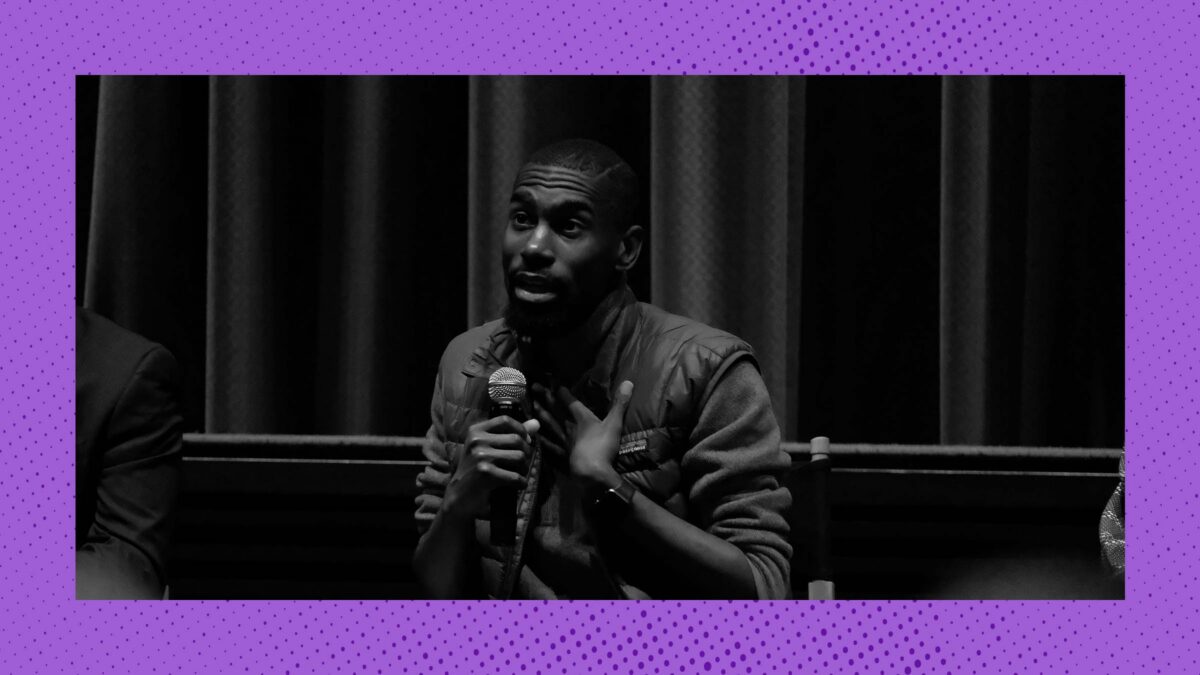
Ford sued DeRay Mckesson, a prominent Black Lives Matter leader and activist who attended the rally, despite the fact that Mckesson did not throw the rock, had not encouraged any violence, and had no knowledge of the incident. Ford’s theory? That Mckesson, a veteran of protests, should have known that violence could result from a protest.
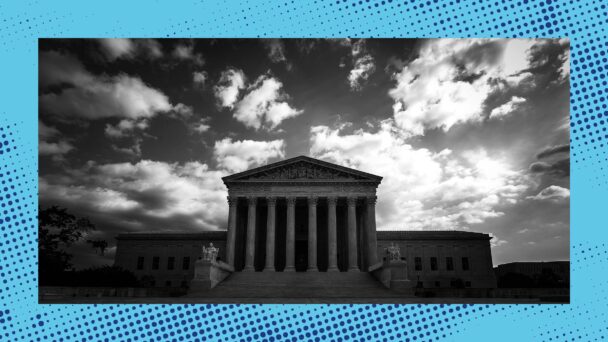
Despite the fanciful, attenuated nature of Ford’s claim, in March, a three-judge panel for the U.S. Court of Appeals for the Fifth Circuit held that Ford’s case against Mckesson could proceed. Mckesson asked the full Fifth Circuit to hear the case, Ford v. Mckesson, but the notoriously conservative court declined to do so in late July.
By letting that completely wrong ruling stand, the Fifth Circuit weakens First Amendment rights for activists and protesters, exposing them to liability for any errant harm that another person might cause at a rally. It will now take the Supreme Court reversing the Fifth Circuit to reaffirm its precedents that protect activists like Mckesson.
If this case sounds familiar, that’s because it’s been proceeding for nearly a decade. Mired in questions of state tort liability and constitutional defenses, Ford v. Mckesson has traversed all levels of the federal courts. Indeed, the Supreme Court has already weighed in at an earlier stage of the case: In 2020, after Mckesson sought the Court’s review of an earlier Fifth Circuit ruling, the Supreme Court directed the Fifth Circuit to certify a question of Louisiana law to the Louisiana Supreme Court—basically, to ensure that the Fifth Circuit was properly interpreting Louisiana state law when applying it in federal court.
This procedural complexity means that even today, the case has not proceeded to trial. Judge Edith Jones’s opinion for the Fifth Circuit in March 2026 weaponizes that fact to trample over Mckesson’s First Amendment rights, claiming “[e]ight years of pretrial litigation are enough.” Unacknowledged in that quip is the fact that the Fifth Circuit played a central role in the delays in the case. For example, the Fifth Circuit twice revised its original opinion over a period of eight months, culminating in one judge belatedly switching his vote to a dissent in light of First Amendment concerns.
Beyond the procedural mess, the Fifth Circuit’s own disregard for the First Amendment effectively requires the Supreme Court to step in and once again correct the lower court’s mistakes. In 1982, the Court held in NAACP v. Claiborne Hardware that speakers are not liable for the consequences of nonviolent First Amendment activity. Claiborne Hardware arose out of an economic boycott that the NAACP had organized in Mississippi against businesses owned by white merchants. Those merchants then sued the NAACP under a few legal theories, including malicious interference with legitimate business operations and liability for the violent actions of a few individuals involved in the boycott.

Judge Edith Jones in November 2024 (screencap via YouTube)
While the business owners prevailed at the Mississippi Supreme Court, the U.S. Supreme Court ruled for the NAACP. In an opinion written by Justice John Paul Stevens, the Court held that courts may not impose civil liability “merely because an individual belonged to a group, some members of which committed acts of violence.” And even statements that might reference violent force still retain First Amendment protections: “An advocate must be free to stimulate his audience with spontaneous and emotional appeals for unity and action in a common cause. When such appeals do not incite lawless action, they must be regarded as protected speech,” Stevens wrote.
Claiborne Hardware has thus stood for over forty years for the principle that leaders of movements are not liable for the actions of others just because they speak or associate with them. Under Claiborne Hardware and the Court’s 1969 decision in Brandenburg v. Ohio, unless a person incites others to imminent, lawless action—in other words, specifically directing an audience to violate the law at that very moment—the state generally cannot punish people, civilly or criminally, for speaking or associating with others.
What’s confounding about this case is that there’s no evidence at all that Mckesson did anything to encourage violent action by being present at the Baton Rouge protest; he did not plan the protest or control its participants. It’s impossible to establish any causal link between Mckesson’s presence at the protest and the injury the police officer sustained. To this day, no one has actually identified who injured Ford in the first place.

Even so, the Fifth Circuit eagerly crafted a theory of attenuated liability here, based on Mckesson’s presence in Baton Rouge and his national reputation, framed by conservatives, as a leader of a “dangerous” movement. One can easily imagine how this theory, if applied to other cases, could make many other people liable for damages for other people’s actions. As the dissent to the most recent Fifth Circuit decision to not reconsider the case notes, the majority’s rule effectively creates “a ‘negligent protest’ theory.”
The implications of this decision are staggering. Any protest leader could theoretically be liable for the actions of an anonymous counterprotester. Any one protester attending a rally can act on their own, damaging property or getting into an altercation with law enforcement; that too could create liability for the leaders of a movement, even if they never said anything or knew what happened.
Mckesson has not yet appealed to the Supreme Court. But the Fifth Circuit’s disregard for fundamental First Amendment principles almost certainly means the Court would grant certiorari if he seeks review. The Fifth Circuit has had a terrible recent record at the Supreme Court, especially in First Amendment cases; multiple justices have repeatedly called out the Fifth Circuit’s mistakes in applying free speech rules. Given the stakes of Ford v. Mckesson for activists and movements, a reversal can’t come quickly enough.