By the 1960s, America was on the precipice of ecological disaster. Smog blanketed cities, species were going extinct at alarming rates, the pesticide DDT was ravaging bird populations, and pollution quite literally caused the Cuyahoga River in Ohio to catch fire.
Under pressure from a burgeoning environmental movement and growing concern from the public, Congress passed a series of sweeping environmental protection laws, including the Clean Air Act, Clean Water Act, and National Environmental Policy Act, which still serve as the foundational texts of American conservation policy. Then, in the early 1970s, President Richard Nixon urged Congress to take further measures to protect wildlife. Lawmakers responded by passing the 1973 Endangered Species Act—comprehensive legislation focused on protecting imperiled species and the ecosystems upon which they rely.
At a high level, the Endangered Species Act works like this: The U.S. Fish and Wildlife Service (for terrestrial and freshwater organisms) and the National Marine Fisheries Service (for marine organisms) create a list of endangered and threatened species. Anyone who harms those species can be subject to civil or criminal penalties imposed by the Secretary of the Interior (for terrestrial and freshwater organisms) or Secretary of Commerce (for marine organisms) and enforced by federal district courts. The Act also contains a citizen suit provision allowing any person to sue when they believe any other person or government agency has violated the Act, and to ask for a court order preventing further violations.
The Act’s most critical provision makes it illegal to “take” a species listed as threatened or endangered. The definition of “take” is expansive: to harass, harm, pursue, hunt, shoot, wound, kill, trap, capture, or collect any listed species, or to attempt to engage in any of the aforementioned conduct.

The scope of illegal “takes” has been a hot topic for courts since the Act’s passage. In 1995, the Supreme Court held in Babbitt v. Sweet Home Chapter of Communities for a Great Oregon that “harm” includes not only direct, intentional harm, but also indirect or “incidental” harm, which can include “significant” habitat “degradation” that results in injury to or the killing of wildlife. A direct, intentional take would be, for example, shooting an endangered owl. An incidental take would be clearing the old-growth forest the owl needs to breed, leading to the deaths of individual owls and a decline in the owl population over time.
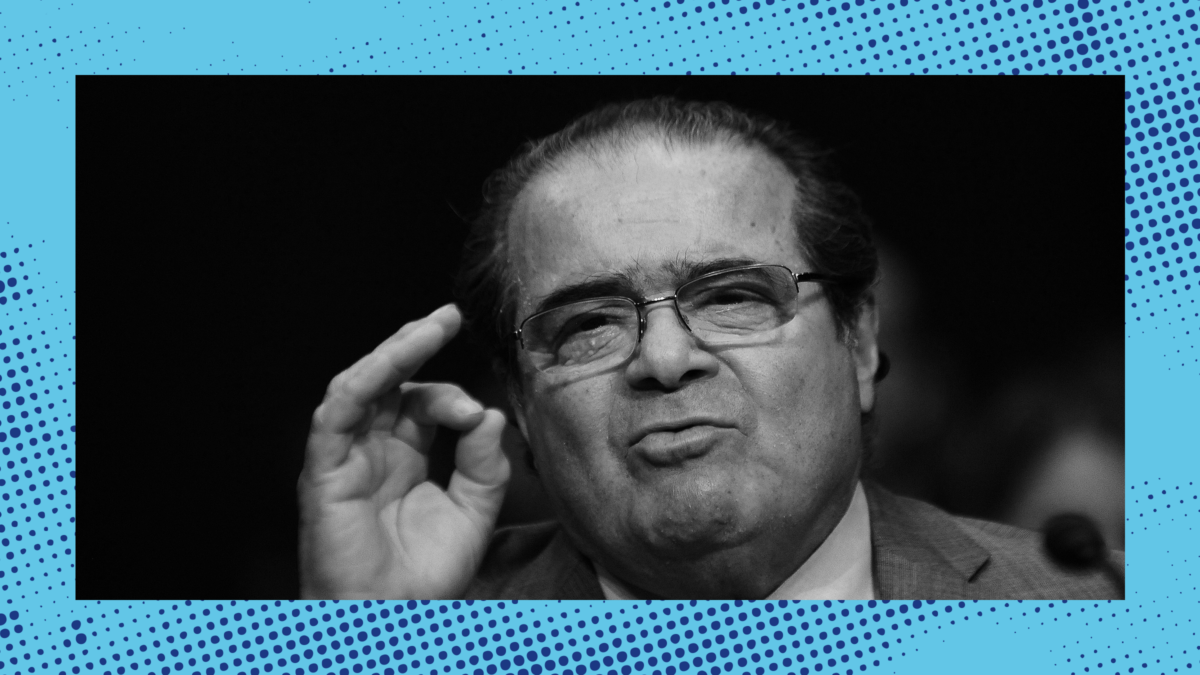
Lurking at the end of the Court’s opinion in Babbitt is a dissent from the late Justice Antonin Scalia, who through the power of textualism determined that in order to qualify as a “harm” under the Endangered Species Act, a person must direct their conduct “immediately and intentionally against a particular animal.” In his view, “acts or omissions that indirectly and accidentally cause injury to a population of animals” do not count. In other words, in order to violate the ESA, it is not enough to cut down a tree and accidentally kill some endangered owls; in cutting down the tree, you must have wanted a specific owl to die.
Scalia’s argument here contravenes the purpose of the Act, which Congress passed to “provide a means whereby the ecosystems upon which endangered species and threatened species depend may be conserved.” His reasoning, however, fits squarely with the conservative logic that wildlife is only valuable to the extent that it is economically beneficial, and that industry should not be punished for harming wildlife just because that wildlife is in the way of profit.
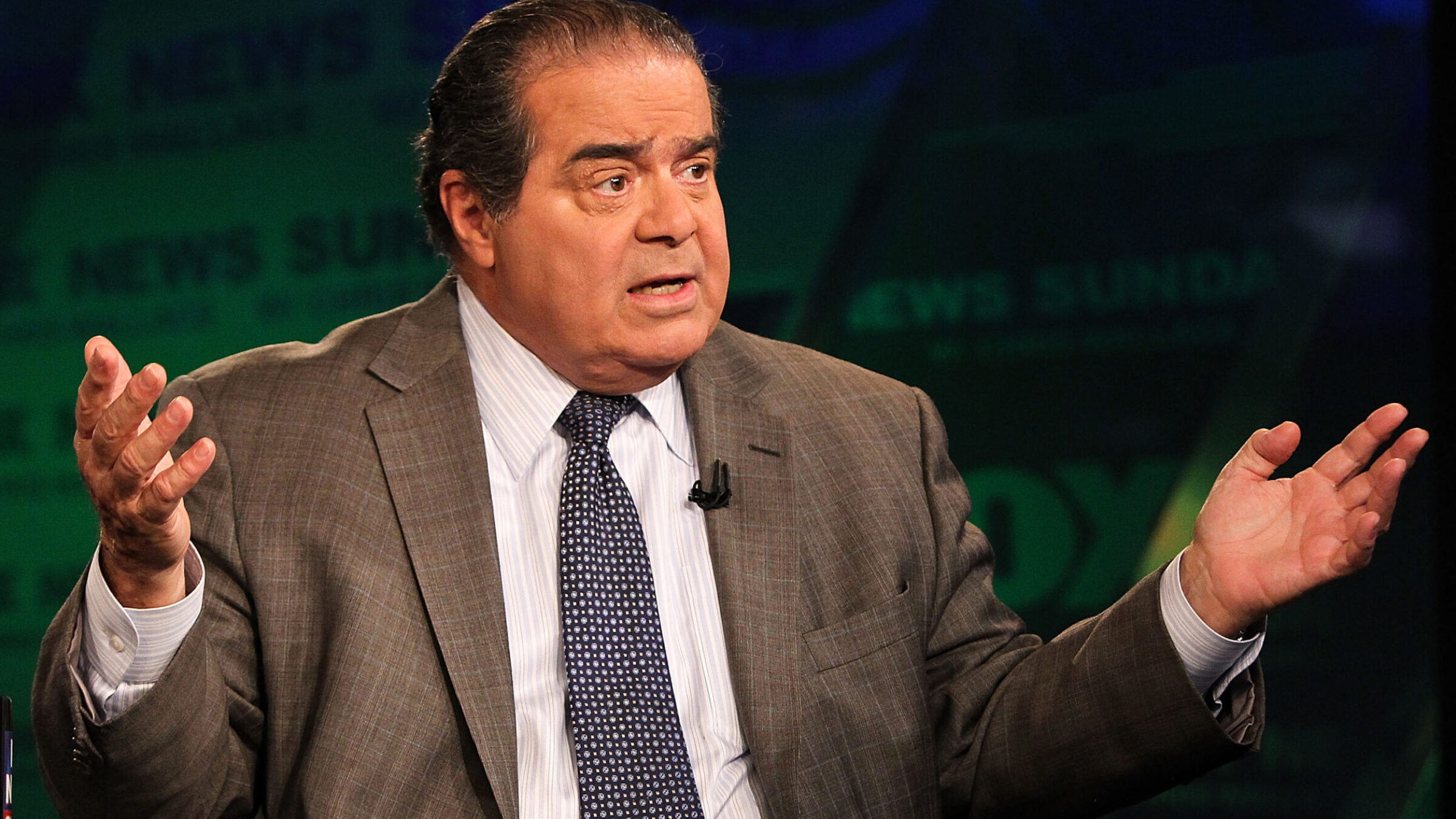
(Photo by Paul Morigi/Getty Images)
For three decades, Scalia’s Babbitt dissent has been sitting in the pages of the United States Reports, just waiting for an administration brave enough to breathe new life into it. Sure enough, in September 2026, Brian Nesvik, whom President Donald Trump appointed to run the U.S. Fish and Wildlife Service, issued a memorandum adopting Scalia’s definition of “take” as official federal policy. “A vessel that inadvertently strikes a whale has not taken it, because the vessel’s course was not set against the whale,” Nesvik wrote. “Felling a tree is not a take of the bats roosting in it unless the tree is felled for the purpose of killing and capturing them.”
The Trump administration’s proffered redefinition of “take” not only ignores the Court’s precedent in Babbitt, but also presents practical implications for endangered species conservation. Previously, when logging, development, or mining destroyed an endangered species’s habitat, the entity responsible would be accountable even if it did not intend to harm that species. Businesses rarely intend to harm endangered wildlife. Under this new rule, there would be no reason for them to even think about the possibility.
The Nesvik memorandum will almost certainly be subject to legal challenge. Such a lawsuit, however, would not come without risk, especially if the case were to make its way to the Supreme Court. Babbitt is still good law, and it provides strong precedent holding that a take includes incidental, not only intentional, harm to endangered species. At the same time, this Court is notoriously allergic to following precedent when the result would be considered a win for anything that might be construed as “liberal” politics.
Overturning Babbitt and adopting Scalia’s definition of “take” would be a devastating blow to the Endangered Species Act. It would represent another in a long line of wins at the Court for the Trump administration—one that again prioritizes corporate profits over people’s right to a healthy, livable, biodiverse environment. Perhaps most importantly, following Scalia’s definition of “take” would mean that wildlife would die and nobody would be held accountable.
That said, if the Court were to overrule Babbitt, there would still be plenty of room for state and local governments to take up the mantle of conservation. Land trusts and nonprofits can continue to work towards preserving wildlands for the benefit of endangered species and the public. Finally, we can still individually do our part to support conservation initiatives. Congress passed the Endangered Species Act in large part because of the actions of everyday people who took a stand for environmental protection. If the Trump administration or the Supreme Court weakens the Act, we can work together to strengthen it.
If you enjoyed this post, please consider supporting the work of Balls & Strikes with a monthly or annual subscription. Click here to learn more and sign up.