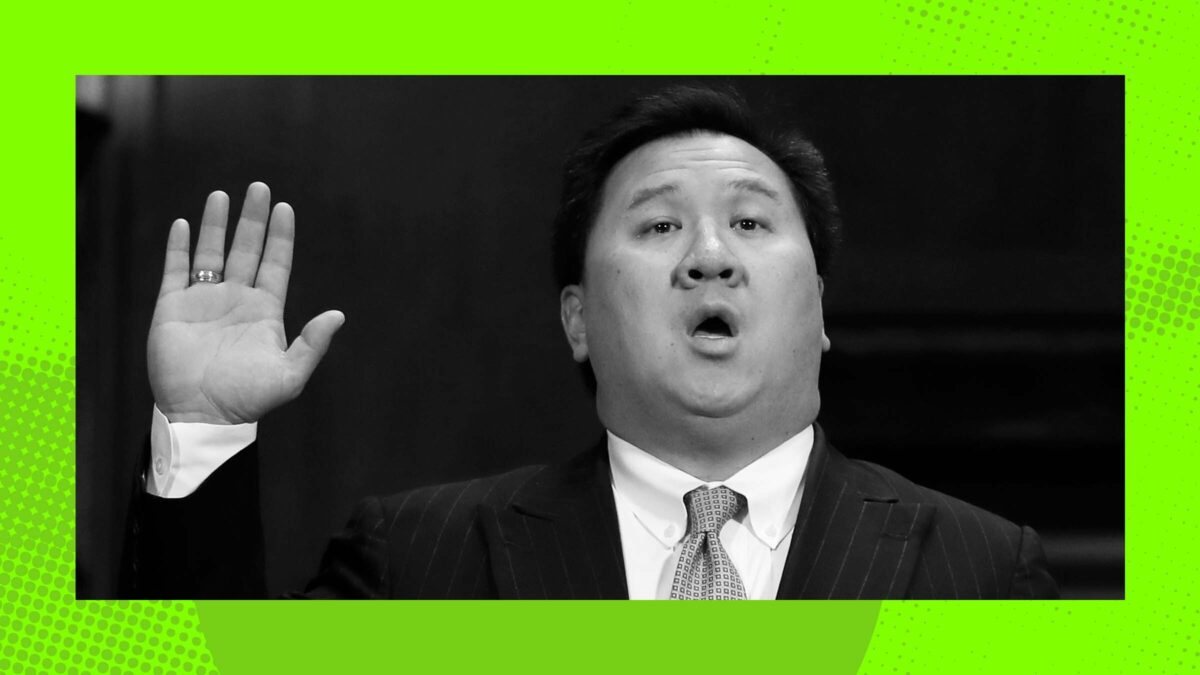
Of the sweaty, desperate men who have spent the last several years auditioning to become President Donald Trump’s fourth Supreme Court nominee, none have been more shameless than James Ho. Ho, whom Trump appointed to the Fifth Circuit Court of Appeals in 2018, has sought to earn Trump’s attention by (among many other things) playing footsie with racist conspiracy theories, complaining about cancel culture, and unironically using the phrase “woke Constitution.” In a law review article published earlier this year, Ho offered a list of proposed qualifications for federal judges that very obviously aligns with how he perceives himself within the conservative legal movement: Judges should be willing to “stand against the tide, stand up to the mob, and withstand the seductions and pressures of the cultural elite,” he wrote.
Unfortunately for Ho, the universe has not afforded Trump the opportunity to act on his objective, unbiased advice. The Court’s two oldest conservative justices, Clarence Thomas and Samuel Alito, ultimately decided not to retire before the 2026 midterm elections. And with Democrats poised to at least narrow the GOP’s Senate majority and perhaps even flip the upper chamber in three weeks, if a Supreme Court seat were to open up in the next two years, any Trump nominee would have a very tough time getting the promotion they covet.
As a result, Ho appears to be kind of going through it right now. In a forlorn concurring opinion in Pittsburgh Logistics Systems v. Glen Rose Transportation Management, which the Fifth Circuit decided on October 2, Ho pondered the “frustrating” plight of a “good judge” who stands accused of being “willing to use his rulings to further his own personal career ambitions.” The basic problem with these “unjust assaults on one’s honor,” he explained, is that because the charges “cannot be refuted,” judges accused of politicking get stuck in an “audition trap” in which critics frame everything they do as just more evidence of their ulterior motives.
For support for this proposition, Ho cites a March 2025 post about the “audition trap” written by the alarmingly online conservative law professor Josh Blackman, who, for the record, lives within the geographic boundaries of the Fifth Circuit and seems notably upset about Trump’s latest Fifth Circuit nominee whose name is not Josh Blackman. As Joe Patrice points out at Above the Law, the funniest aspect of Ho’s citation to Blackman in Pittsburgh Logistics Systems is that it does not acknowledge that the subject of Blackman’s post was James Ho himself.

The backstory on how Ho managed to expound on such an arcane subject in the first place: One of the parties in the case, frustrated with what they perceived as “excessive and unnecessary delays,” fired off an email to the magistrate judge threatening to expose the magistrate judge’s incompetence to the sender’s “many friends” in Texas politics. (Note: You really, really should not do this.) The magistrate judge, whom Ho says was “actively being considered and promoted in certain circles for appointment to the district court,” responded by summoning the email sender to his chambers and telling him to cut that shit out.
Generally, judges are not supposed to meet with one party in a case without including or at least informing the other(s). (These are called “ex parte” communications.) On appeal, though, the Fifth Circuit concluded that since the subject of the meeting was the offending party’s “unacceptable communications with the court’s staff” and not the merits of the legal dispute, the meeting was not important enough for the Fifth Circuit to step in and alter the result.
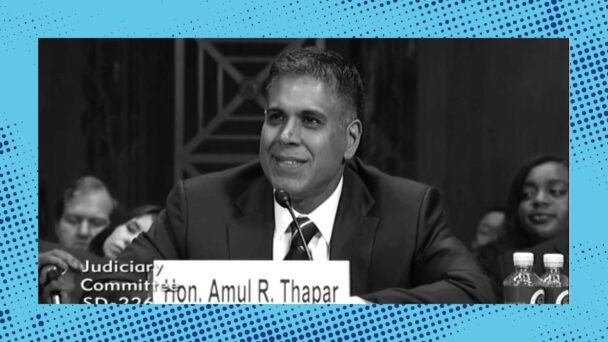
It’s not clear from the Fifth Circuit opinion that the magistrate judge chewed out the email sender because of the magistrate judge’s putative desire for a district court nomination, as Ho insinuates. Again, as a general matter, federal judges do not appreciate litigants sending them can-I-speak-to-your-manager emails regardless of whether they happen to be up for a promotion at that moment. Nevertheless, Ho took the chance to write what is essentially a glorified Tumblr post defending the integrity of judges who face scurrilous allegations that their rulings are “tainted” by their “private, personal desire for elevation to another post.”
“No one has the power to look into another man’s heart and ascertain his actual motivations or ambitions. So the accusation of auditioning is indeed irrefutable,” Ho wrote. “Certain actions may seem like auditioning to some, but to others, it’s simply doing the job as the judge best sees fit.”
Ho does not come up with a satisfying solution for this dilemma, but he does manage to compliment judges who accept that “criticism is a fact of life,” and who decide to endure this unfair treatment with dignity and restraint. “It’s not unreasonable that a good judge might care about his reputation for fairness, neutrality, and integrity,” Ho writes. “But caring deeply is the cost of admission to a meaningful and textured life.” I assume that his original draft wrapped with “IT’S ME, JAMES HO, I AM THE GOOD JUDGE REFERENCED HEREIN, AND FOR THE RECORD I LEAD A MEANINGFUL AND TEXTURED LIFE” before a clerk persuaded him that, even in James Ho-adjusted terms, that might be laying it on a bit thick.
I am not really sure what the future holds for guys like Ho, who have spent nearly a decade now positioning themselves to take advantage of an opportunity that, for reasons beyond their control, has yet to come to pass. Even if a seat were to open up in 2027 or 2028, Ho has spent far too much time and effort establishing his MAGA dead-ender credentials to have any hope of peeling off a Democratic senator or two. If Republicans lose control of the Senate next month, Ho might be spending the foreseeable future doing more of this: writing weird opinions no one cares about in pursuit of a job he is never going to get.